Side Dishes
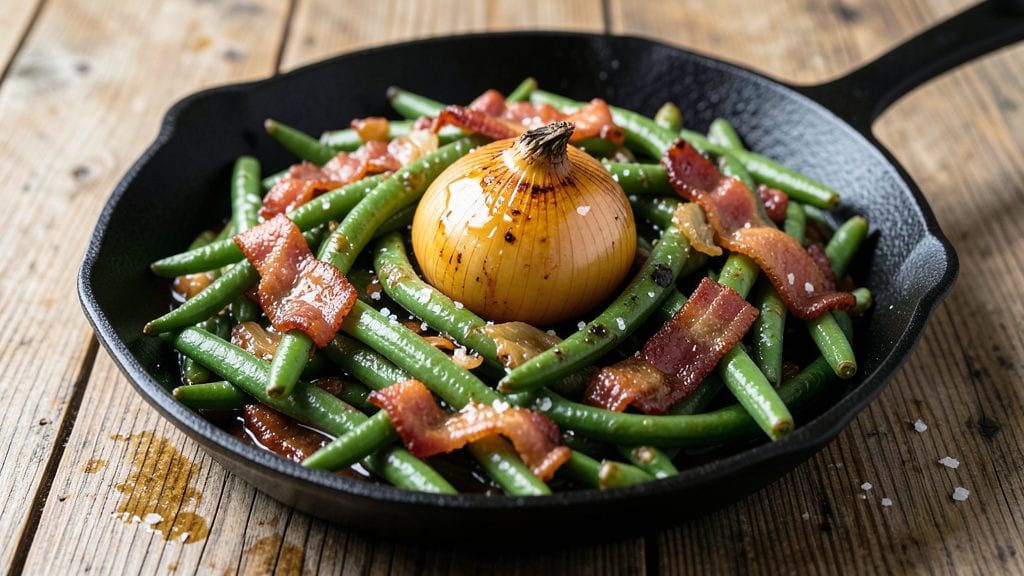
Southern-style green beans with bacon bring that classic Southern comfort to your dinner table in just one pan. The smoky-sweet crunch from crispy bacon transforms simple green beans into a side dish that steals the show.
I've perfected this recipe over years of testing, ensuring the beans stay crisp-tender while the bacon achieves that perfect crackle.
This recipe relies on traditional Southern techniques that make all the difference—a quick salt bath for the beans to remove bitterness, followed by crispy bacon that infuses the dish with rich, savory flavor.
The result is a one-pan wonder that requires minimal prep and delivers maximum flavor, perfect for weeknight dinners or holiday tables.
By the time you finish cooking, you'll have a vibrant side dish with bright green beans, crispy bacon pieces, and a light glaze from the bacon fat. The flavors are balanced—smoky from the bacon, slightly sweet from the beans, and just enough salt to make every bite satisfying.
This is the kind of side that pairs beautifully with grilled meats or fried chicken.
Ready in about 30 minutes, this recipe is simple yet impressive, using just a handful of ingredients to create a dish that tastes like it came from a Southern kitchen. Let's get cooking!
Ingredients for southern style green beans with bacon
Nine simple ingredients transform into a Southern classic with smoky-sweet crunch in one pan.
| Ingredient | Amount | Notes |
|---|---|---|
| Fresh Green Beans 🥦 | 1 ½ lb | Trimmed, ends cut off |
| Thick-Sliced Bacon 🥓 | 8 oz | Cut into 1-inch pieces |
| Large Yellow Onion 🧅 | 1 whole | Thinly sliced, white or yellow |
| Granulated Sugar 🍯 | 1 tbsp | Light brown sugar works too |
| Apple Cider Vinegar 🍎 | 1 tbsp | White vinegar substitute |
| Salt 🧂 | 1 ½ tsp | Kosher or sea salt preferred |
| Ground Black Pepper 🌶️ | ½ tsp | Freshly cracked for best flavor |
| Dried Thyme 🌿 | ½ tsp | Or 1 tsp fresh thyme leaves |
| Unsalted Butter 🧈 | 1 tbsp | For finishing, optional |
| Hot Sauce 🔥 | ½ tsp | Optional, for serving |
The bacon makes or breaks this dish—thick-cut, high-quality bacon like Oscar Mayer or Costco's Kirkland delivers the best crackle and flavor. Look for slices with good marbling, not the lean, pre-cooked kind. The green beans should be bright green and crisp, not wilted or yellowing. Trader Joe's and Whole Foods carry excellent fresh green beans, but any grocery store's produce section will have decent options. Fresh thyme adds depth, but dried works in a pinch—just measure carefully. The onion should be sweet, like a Vidalia if you can find it, but yellow or white works fine.
No thick-cut bacon? Regular bacon cut into larger pieces works, but it won't crisp as well. Running out of apple cider vinegar? Lemon juice at double the amount gets you close. The sugar is key for that classic Southern sweetness—don't skip it, but if you're watching carbs, reduce to 1 tsp. Fresh thyme is ideal, but dried oregano at half the amount works if that's what you have. The butter at the end is optional but adds richness—European-style butter melts beautifully. For extra heat, add a pinch of cayenne with the hot sauce.
This dish reheats beautifully—just add a splash of water and warm through. Keeps for 3-4 days in the fridge, though the bacon gets softer over time. For meal prep, portion into containers and store separately from the bacon to keep it crispier longer. Freezes well for up to 3 months, though the texture changes slightly. Serve with hot sauce on the side for those who like it spicy, or with extra bacon bits sprinkled on top for a restaurant-style finish.
Why You'll Love This Recipe
- Here’s what sold me: the sugar and vinegar combo. It’s not cloying, not tart—it’s that perfect Southern sweetness cutting through the salty bacon. The onions caramelize just enough to make every bite feel like a hug.
- One-Pan Magic: I swear by this trick—just toss the beans, bacon, and onion in one skillet, let the bacon render its magic, and walk away. No chopping boards, no extra pots, and honestly? That smoky bacon fat basting the beans while you’re stirring is the best part.
- Sweet-Savory Balance: Here’s what sold me: the sugar and vinegar combo. It’s not cloying, not tart—it’s that perfect Southern sweetness cutting through the salty bacon. The onions caramelize just enough to make every bite feel like a hug.
- Weeknight Workhorse: Between us, this is my go-to when I need something fast but still feels special. Double the batch on Sunday, and you’ve got lunch for the week or a side for whatever’s on the table. Even my picky-eating nephew asks for seconds.
Step-by-step instructions for Southern style green beans with bacon
This one-pan method delivers crisp-tender green beans with perfectly crispy bacon and a sweet-tangy glaze.
Cook the Bacon Until Crispy
Place the 8 oz thick-sliced bacon in a large skillet over medium heat. Let it cook undisturbed for 5-6 minutes until the edges become golden brown and crispy. This initial rendering creates flavorful fat that will baste the green beans throughout cooking.
Once the bacon is halfway cooked, use tongs to flip the pieces and continue cooking for another 4-5 minutes until fully crispy. Remove the bacon with a slotted spoon and transfer to a paper towel-lined plate, leaving all the rendered fat in the skillet. This fat is the foundation of your dish's rich flavor.
Sauté the Onion Until Soft
In the same skillet with the bacon fat, add the 1 whole large yellow onion that has been thinly sliced. Cook over medium heat for 5-6 minutes, stirring occasionally, until the onions become translucent and just beginning to soften. You want them to maintain some structure rather than fully caramelizing at this stage.
Add the 1 tbsp granulated sugar and 1 tbsp apple cider vinegar to the skillet. Stir well and let cook for another 2 minutes until the onions absorb the liquid and develop a slight gloss. This sweet-tangy mixture will create the signature Southern flavor profile of this dish.
Add Green Beans and Seasonings
Add the 1.5 lb fresh green beans that have been trimmed and cut into 2-inch pieces to the skillet. Sprinkle evenly with 1.5 tsp salt, 0.5 tsp ground black pepper, and 0.5 tsp dried thyme. Stir everything together to coat the green beans completely in the bacon fat and onion mixture.
Cover the skillet with a lid and reduce heat to medium-low. Let the green beans cook for 8-10 minutes, stirring occasionally, until they become tender but still maintain a slight crispness. You'll know they're ready when they easily pierce with a fork but still have some bite to them.
Finish with Butter and Bacon
Remove the skillet from heat and stir in the 1 tbsp unsalted butter. Add the crispy bacon back to the skillet and toss everything together. Let it cook for 1-2 minutes off the heat to allow the butter to melt and coat all the ingredients evenly.
Taste and adjust seasoning if needed, adding a pinch more salt or a splash of apple cider vinegar if desired. For serving, drizzle with 0.5 tsp hot sauce if you prefer some heat. This final step enhances the dish's richness and brings all the flavors together perfectly.
Pro Tips For Making Southern Style Green Beans With Bacon
- CUT BACON IN HALF: Thick-sliced bacon takes forever to crisp. Split each slice lengthwise into two thinner pieces—same surface area, twice the speed. (Yes, it’ll look weird, but your green beans won’t wait.)
- BLANCH BEANS FIRST: Skip the mushy beans: Parboil them for 3 minutes before adding to the skillet. They’ll stay crisp-tender and absorb that smoky bacon-onion sauce like a dream.
- DON’T SKIP THE ONION: That onion isn’t just filler—it’s the base for depth. Sauté it until deep golden, almost caramelized, before adding beans. Rushed onions = flat flavor.
- SWEETEN THE VINEGAR: Add sugar after the vinegar hits the pan. It’ll dissolve faster and balance the tang better. (And no, the recipe won’t taste like candy—just properly balanced.)
Regional styles of this southern style green beans with bacon
Classic Southern Technique
This dish relies on the Southern tradition of salting green beans before cooking to remove bitterness and tenderize them. I always soak the beans in iced water with 1 tsp salt per pound for 30 minutes before cooking—this step makes a huge difference in texture and flavor.
The salt draws out impurities while keeping the beans crisp. Rinse thoroughly before using to prevent over-saltiness in the final dish. 🧂
Texas-Style Twist
In Texas, they take it a step further by adding 1 diced jalapeño with the onions for a subtle heat. I like to remove the seeds for mild heat or keep them for a spicier kick.
Texans also often use smoked paprika (½ tsp) instead of thyme for a deeper smoky flavor that pairs beautifully with the bacon. The result is a dish with just enough kick to complement rich main courses like brisket or fried chicken.
Carolina Lowcountry Version
The Lowcountry region of South Carolina swears by a shrimp and bacon variation—just add ½ lb peeled shrimp with the green beans in the final 3 minutes of cooking. The shrimp absorb the bacon fat perfectly, adding a seafood twist.
Locals also often finish with a splash of hot sauce (like Crystal or Tabasco) and serve over buttered cornbread. This version is especially popular at seafood boils and summer gatherings.
Appalachian Mountain Style
Up in the Appalachian Mountains, they keep it simple but hearty. I've seen recipes where they add ½ cup diced potatoes to the pan with the onions, letting them cook until tender alongside the beans. The potatoes soak up the bacon fat and add a comforting starchy element.
Some versions also include a dash of cayenne pepper for a slow-building heat that lingers. This rustic take is perfect for cold mountain evenings.
Modern Southern Fusion
For a contemporary twist, try adding ½ cup crumbled feta cheese at the very end—it adds a bright tang that cuts through the richness of the bacon. Another great addition is toasted pecans (¼ cup) for crunch and a touch of Southern sweetness.
I've also seen versions with balsamic glaze drizzled over the top before serving, adding an unexpected depth that modern diners love. These updates keep the dish traditional while making it feel fresh and exciting.
Gulf Coast Adaptation
Near the Gulf Coast, where seafood dominates, you'll find versions with shrimp, crab, or even crawfish mixed in. The coastal air gives the bacon a slightly different smokiness, and local chefs often finish with a sprinkle of file powder (ground sassafras) for an authentic Louisiana flavor.
This adaptation works beautifully as a side for po' boys or gumbo, bringing that coastal charm to your table. 🌊
Nutrition facts
Frequently asked questions
Why do Southern recipes salt green beans before cooking?
Salting green beans first removes bitterness and tenderizes them by drawing out impurities. The traditional method uses 1 tsp salt per pound in iced water for 30 minutes before rinsing. This step keeps the beans crisp while enhancing their natural sweetness—key to authentic Southern flavor.
Can I use frozen green beans instead of fresh?
Yes, but thaw them first and pat completely dry to prevent a soggy texture. Use 1.5 lb frozen beans (about 2 cups) and reduce cooking time by 2-3 minutes. The salt soak step becomes even more important with frozen beans to maintain crispness.
What makes this different from regular bacon green beans?
This recipe relies on thick-cut bacon cooked until fully crispy for maximum flavor infusion, plus the classic Southern sweet-tangy balance from sugar and vinegar. The beans stay crisp-tender through careful timing and low heat, while the bacon fat creates a natural glaze that ties everything together.
How do I keep the bacon extra crispy?
Cook the bacon in a cold skillet over medium-low heat for 10-12 minutes, flipping only once. Use a wire rack on a baking sheet to drain excess fat after cooking. For serving, place bacon pieces on top of the beans right before eating to maintain crispness.
Can I make this ahead of time?
Store components separately: beans and onions in one container, bacon in another. Reheat by sautéing the beans/onions in bacon fat for 5 minutes, then crisp fresh bacon in a separate pan. The dish reheats best when assembled fresh—bacon loses crispness when stored together.