
Side Dishes
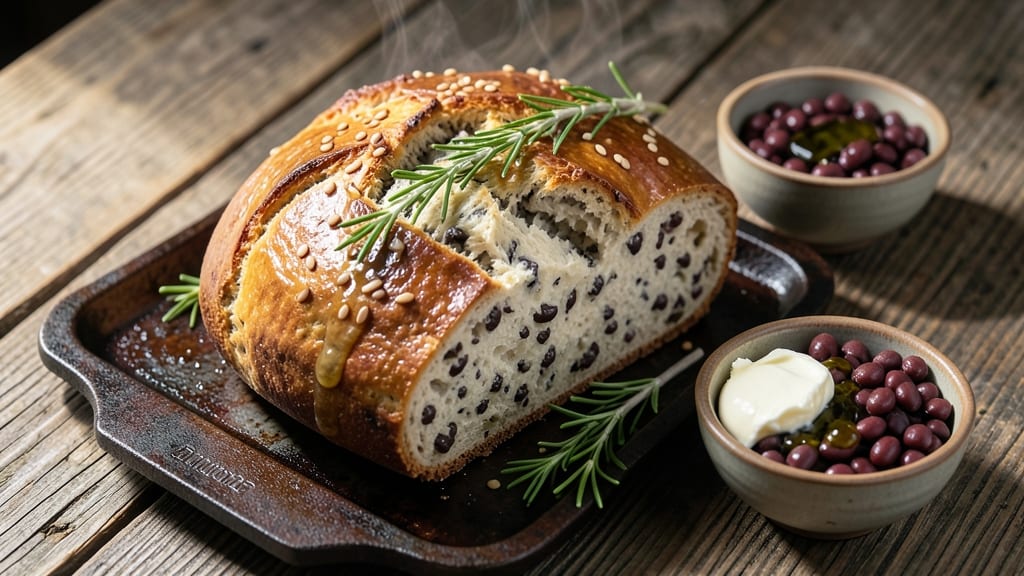
This bean bread recipe transforms humble black-eyed peas into a hearty, crunchy loaf that’s as satisfying as it is versatile.
The magic happens when soaked beans blend into a thick batter, then bake into a loaf with a golden crust and tender crumb—perfect for vegan meals or as a protein-packed side.
I developed this recipe after realizing how often black-eyed peas were underutilized beyond salads, and the results speak for themselves.
The secret lies in the batter’s texture—steaming the baked loaf creates that signature crispy crust while keeping the inside moist. No special equipment is needed beyond a mixing bowl and oven, making this a foolproof recipe for both beginners and experienced cooks.
The flavor is earthy, slightly nutty, and deeply comforting, with just enough spice to elevate any plate.
By the time it emerges from the oven, you’ll have a loaf that’s crunchy on the outside, tender inside, and packed with plant-based protein. It pairs beautifully with soups, stews, or even as a standalone main dish with a smear of vegan butter.
The best part? It reheats perfectly, making it ideal for meal prep.
This recipe isn’t just about the bread—it’s about reimagining how we use everyday ingredients. Whether you’re vegan, gluten-conscious, or simply looking for a hearty side, this black-eyed pea loaf delivers restaurant-quality results with minimal effort. Let’s get baking!
Ingredients for bean bread
Transform humble black-eyed peas into a protein-rich loaf with these 15 essential ingredients.
| Ingredient | Amount | Notes |
|---|---|---|
| Dried Black-Eyed Peas 🌱 | 1 ½ cups | Rinsed thoroughly before soaking |
| Water 💧 | 4 cups | For soaking black-eyed peas |
| All-Purpose Flour 🌾 | 1 ½ cups | Unbleached preferred for texture |
| Unsweetened Soy Milk 🥛 | ¾ cup | Full-fat for creaminess |
| Extra-Virgin Olive Oil 🫒 | ⅓ cup | For moisture and richness |
| Vegan Butter 🧈 | ¼ cup | Melted, Earth Balance brand |
| Granulated Sugar 🍯 | ¼ cup | Light brown preferred |
| Apple Cider Vinegar 🍎 | 1 tbsp | For tangy depth |
| Onion Powder 🧅 | 1 tsp | Freshly ground preferred |
| Garlic Powder 🧄 | 1 tsp | No garlic salt |
| Smoked Paprika 🌶️ | ½ tsp | For subtle smokiness |
| Ground Black Pepper 🌶️ | ½ tsp | Freshly cracked |
| Diamond Crystal Kosher Salt 🧂 | ½ tsp | Fine grain preferred |
| Baking Powder 🍞 | 1 tsp | Aluminum-free recommended |
| Nutritional Yeast 🧀 | ¼ cup | For cheesy flavor |
The black-eyed peas are the heart of this recipe—Bob's Red Mill or Whole Foods carry high-quality dried beans. Soak them overnight in 4 cups water for optimal texture; discard the soaking liquid before blending. Trader Joe's offers pre-rinsed beans if you're short on time, but rinsing thoroughly is critical to remove any debris. For the flour, King Arthur Unbleached yields the best crumb structure, though any all-purpose will suffice. The nutritional yeast adds depth and a cheesy note—Bragg is the gold standard, but store brands work too.
No soy milk? Oat milk or cashew milk works equally well, though the texture may vary slightly. Substitute avocado oil for olive oil if you prefer a neutral flavor, though olive oil adds subtle fruity notes. Short on vinegar? Lemon juice at the same amount delivers comparable tang. For the spices, Penzeys or bulk bins ensure maximum freshness—ground spices lose potency quickly. The baking powder must be fresh; test by mixing with water—if it fizzes, it's good to go. Prefer a sweeter loaf? Increase the sugar to 0.375 cup and reduce the vinegar by 0.5 tbsp.
Store the baked loaf in an airtight container at room temperature for up to 3 days, though it's best enjoyed within 24 hours for peak crispiness. For longer storage, wrap tightly in foil and refrigerate for 5 days or freeze for 3 months. Reheat slices in a 350°F oven for 5-7 minutes to restore crispiness. The loaf reheats beautifully—ideal for meal prep. Portion into individual slices for easy grab-and-go servings, or serve whole with vegan butter for maximum indulgence.
Why You'll Love This Recipe
- No Soak, No Stress: I swear by this—just toss the dried black-eyed peas in hot water for 10 minutes, then blend. No overnight soaking, no fuss. The soy milk adds richness without extra steps, and the olive oil keeps it tender without greasing up the pan.
- Earthy Yet Unexpected: That first bite? Nutty, slightly sweet from the peas, with a subtle crunch from the crust. The soy milk gives it a delicate, almost cake-like lightness—like a cross between cornbread and a savory muffin. Honestly, I didn’t expect it to taste this good with so few ingredients.
- Leftover Reinvention: Slice it up for breakfast toast with peanut butter, or fry it into crispy croutons for salads. My kids even sneak bites straight from the pan—warm, soft, and perfect for dipping in hummus. It’s the kind of bread that disappears fast but keeps giving.
- Pantry Staple Power: Black-eyed peas and flour? Always on hand. Soy milk adds protein without costing a fortune, and olive oil stretches further than butter. I made a whole loaf for under $3, and it feeds my family for days. Budget-friendly doesn’t mean boring—this is proof.
Step-by-step instructions for hearty black-eyed pea bread
This method delivers a loaf with satisfying crunch and moist crumb—every slice reveals the magic of properly hydrated black-eyed peas.
Soak and Cook the Black-Eyed Peas
Rinse the 1.5 cups dried black-eyed peas thoroughly under cold water, then place them in a medium saucepan with the 4 cups water. Bring to a boil over high heat, then immediately reduce to a simmer. Cover and cook for 2 hours until the peas are tender but not mushy—they should hold their shape but be easily mashed with a fork.
Drain the cooked peas in a colander, reserving ½ cup of the cooking liquid. This starchy liquid will prevent your bread from drying out. Let the peas cool slightly before handling—hot peas release excess moisture that can make your batter gummy. I like to spread them on a baking sheet to cool faster while I prepare the other ingredients.
Mix Wet Ingredients for Maximum Moisture
In a large mixing bowl, combine the cooled black-eyed peas, 0.75 cup unsweetened soy milk, 0.33 cup extra-virgin olive oil, and 0.25 cup vegan butter (melted). Add the 0.25 cup granulated sugar, 1 tbsp apple cider vinegar, and 0.25 cup nutritional yeast. Mix with a wooden spoon until completely smooth—you should have a thick, creamy batter with no visible lumps.
The vinegar here serves two purposes: it tenderizes the peas slightly and adds a subtle tang that balances the richness. If your mixture looks too thick after adding all ingredients, gradually whisk in 1-2 tablespoons of the reserved pea cooking liquid until it reaches a thick pudding consistency. This ensures proper hydration without making the batter runny.
Combine Dry Ingredients and Fold Gently
In a separate bowl, whisk together the 1.5 cups all-purpose flour, 1 tsp baking powder, 0.5 tsp diamond crystal kosher salt, 0.5 tsp smoked paprika, 1 tsp onion powder, 1 tsp garlic powder, and 0.5 tsp ground black pepper. Sift the mixture directly into the wet ingredients, then gently fold with a spatula just until combined—overmixing develops gluten and creates a dense, chewy loaf instead of the tender crumb we want.
Here's the thing—black-eyed peas are dense, so the batter will be thick. Don't be tempted to add extra liquid. The combination of soaked peas, soy milk, and olive oil provides all the moisture needed. The dough should hold its shape when dropped from a spoon but still be pourable. If you're concerned about dryness, remember the reserved pea liquid is your secret weapon for the next step.
Prepare and Bake for Perfect Texture
Preheat your oven to 350°F and grease a 9x5-inch loaf pan generously with olive oil or vegan butter. Pour the batter into the prepared pan and smooth the top with a spatula. Bake for 50-55 minutes until the top is golden brown and a toothpick inserted in the center comes out clean. The internal temperature should reach 205°F—this ensures the peas are fully cooked through.
I know it seems counterintuitive to bake at this relatively low temperature, but it allows the peas to cook gently while developing that satisfying crunch in the crust. If the top browns too quickly, tent the pan with aluminum foil after 30 minutes to prevent over-browning while maintaining even cooking. The bread will continue to set as it cools, so remove it from the pan immediately when done.
Rest and Slice for Optimal Texture
Let the loaf cool in the pan for 10 minutes, then transfer it to a wire rack to cool completely. This resting period allows the internal structure to stabilize—cutting too soon results in a crumbly texture. For the best slices, use a sharp serrated knife and cut against the grain of the peas when possible. Each slice should reveal a mix of tender crumb and satisfying crunch from the peas.
Store any leftovers wrapped tightly in plastic at room temperature for up to 3 days, or freeze for 3 months. The flavor actually improves slightly as the bread sits, allowing all the components to meld together. This bread pairs beautifully with soups, stews, or simply toasted with vegan butter for breakfast.
Pro Tips For Making Bean Bread
- SOAK PEAS OVERNIGHT: Dried black-eyed peas absorb water better when soaked—just cover them in cold water for 12 hours. I used to skip this step and ended up with a dense, gummy loaf; the texture improves dramatically when they’re pre-hydrated.
- BLEND TO SMOOTH: Pulse the soaked peas in batches until they’re finely chopped, not pureed—you want texture, not mush. My first attempt turned into a gluey batter; a food processor set to short bursts keeps the bread light and crumbly.
- MEASURE FLOUR BY WEIGHT: Scooping flour from the bag packs in air, throwing off ratios. Use a kitchen scale for the all-purpose flour—1 cup isn’t always 120 grams, and this bread is fussy about balance.
- BAKE LOW AND SLOW: Start at 350°F (175°C) for the first 20 minutes, then drop to 325°F (160°C). I learned this after watching the crust burn while the center stayed doughy—patience here guarantees even cooking.
Creative variations of these flavors
Southern-Style Cornbread Twist
Swap half the black-eyed peas for 1 cup cooked corn kernels (fresh, frozen, or canned) to create a Southern-inspired hybrid loaf. The corn adds natural sweetness and a satisfying crunch, while keeping the protein-rich benefits.
I like using Golden Promise corn for its buttery flavor—simmer it in the same pot as the peas during cooking to infuse flavors. Add 1 tsp cornmeal to the dry ingredients for extra texture and a familiar cornbread bite. 🌽
Spicy Cajun-Inspired Loaf
Transform this into a Cajun feast by adding 1 tbsp Creole seasoning (I use Tony Chachere's) and ½ tsp cayenne pepper to the wet ingredients. For extra heat, fold in 2 tbsp chopped andouille sausage (vegan or traditional) into the batter.
Serve with a side of vegan gumbo or as a hearty sandwich base with spicy vegan mayo. The smoky paprika in the original recipe complements the Cajun flavors beautifully.
Herbed Focaccia Adaptation
Create a rustic focaccia-style loaf by spreading the batter thinly on a parchment-lined baking sheet and dimpling the top with your fingers. Drizzle with 2 tbsp olive oil after baking, then sprinkle with 2 tbsp chopped fresh rosemary and 1 tbsp flaky sea salt.
Bake at 375°F for 35-40 minutes until golden. This version works perfectly as a vegan appetizer or alongside marinated olives and hummus. The focaccia method creates a crispy, airy texture that contrasts with the original dense loaf. 🌿
Gluten-Free Version
Replace the all-purpose flour with a 1:1 gluten-free baking flour blend (I recommend Bob's Red Mill or King Arthur Measure for Measure) and add ½ cup almond flour for better texture. Increase the baking powder to 1.5 tsp to compensate for lower gluten structure.
The batter will be thicker, so you may need to add 1-2 tbsp extra soy milk to achieve the right consistency. This version maintains the same hearty texture but with a slightly nutty undertone. 🌾
Sweet Banana-Nut Loaf
Add natural sweetness by blending 1 ripe banana into the wet ingredients along with ½ cup chopped walnuts or pecans. Reduce the sugar to 0.125 cup and add 1 tsp cinnamon to the dry ingredients.
This version makes a fantastic breakfast loaf—slice and toast with vegan almond butter or serve with maple syrup. The banana adds moisture while the nuts provide satisfying crunch and healthy fats. 🍌
Savory Mushroom Swirl
For an umami-packed variation, sauté 1 cup finely chopped mushrooms (cremini or shiitake) with 1 tbsp olive oil, 1 tsp thyme, and ½ tsp garlic powder until golden. Fold the mushrooms into the batter, then swirl them into the loaf pan before baking.
The mushrooms add earthy depth that pairs perfectly with the peas. This version makes an excellent side for vegan risotto or lentil stews. 🍄
Nutrition facts
Frequently asked questions about bean bread
Can I use canned beans instead of dried for this recipe?
Canned beans work in a pinch, but dried yield better texture and flavor. For the best results, use 1.5 cups drained canned black-eyed peas (rinsed thoroughly) and reduce the soaking time to 15 minutes in warm water. The skin may be softer than dried, but the loaf will still hold together. For maximum crispiness, add 1 tbsp cornstarch to the batter to compensate for the lack of natural starch from soaking.
Why does my bean bread turn out dense instead of crunchy?
Overmixing the batter or skipping the 10-minute pan rest are the most common culprits. The peas need gentle folding, not vigorous stirring—think "just until combined." Also, ensure your oven is fully preheated to 350°F and the pan is well-greased. If the batter seems too thick, add 1 tbsp reserved pea liquid (not water) to maintain moisture balance.
How can I make this bread gluten-free?
Swap the all-purpose flour for a 1:1 gluten-free baking blend (like Bob's Red Mill) and add ½ cup almond flour for structure. Increase the baking powder to 1.5 tsp and reduce the soy milk by 2 tbsp to prevent stickiness. The batter will be thicker—adjust with 1 tbsp extra pea liquid if needed. Bake for 5-7 minutes longer as gluten-free versions need extra time to set.
Can I bake this in a different pan shape?
For a round loaf, use a 9-inch cake pan and bake for 45-50 minutes. For individual muffins, divide batter into 12 greased muffin cups and bake at 375°F for 20-25 minutes. The cooking time decreases because the batter has more surface area exposed to heat. Always check doneness with a toothpick—it should come out clean or with a few moist crumbs.
What's the best way to reheat sliced bean bread?
For maximum crispiness, wrap slices in foil and warm in a 350°F oven for 5-7 minutes. Toaster ovens work too—set to 375°F for 3-4 minutes on the "toast" setting. Avoid microwaving as it turns the crust soggy. Pro tip: Store slices in an airtight container with a paper towel between layers to maintain crispness for up to 3 days.