Side Dishes
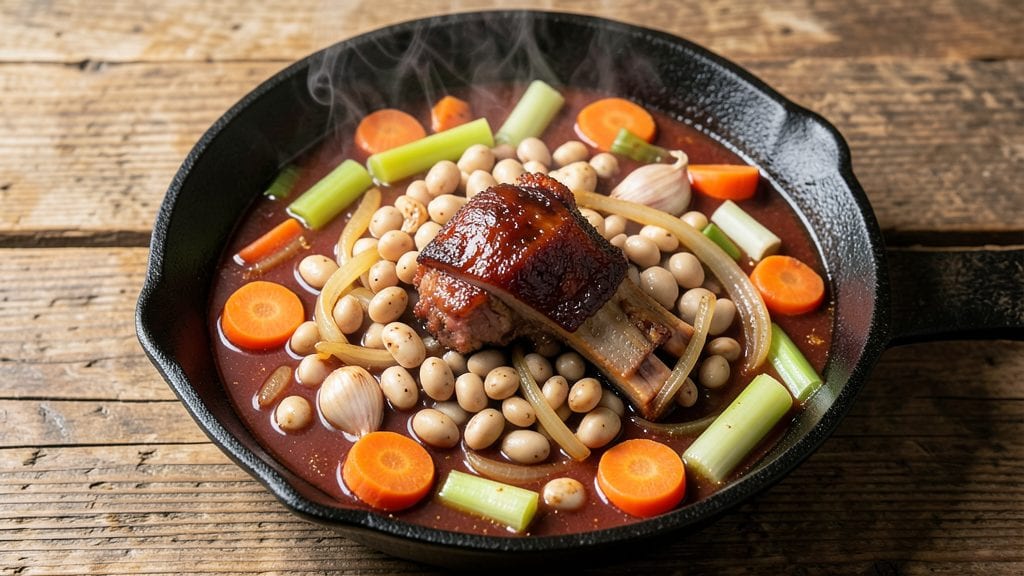
This old-fashioned ham hock and beans recipe delivers the kind of soulful comfort that transforms a simple meal into a family tradition. The slow-simmered beans develop deep, smoky flavors while the ham hock infuses the broth with rich, savory essence—every spoonful tells a story of patience and care.
I've perfected this method over years, ensuring the beans stay tender while the ham remains perfectly tender without falling apart.
The secret lies in the slow cooking process, which allows flavors to meld and intensify over hours. A touch of molasses adds just the right amount of sweetness to balance the savory depth, while traditional seasonings like smoked paprika and bay leaves create that unmistakable Southern flavor profile.
This dish isn't just about the ingredients—it's about the time invested and the love poured into each pot.
By the time you serve this dish, you'll have a pot of beans so flavorful they'll disappear faster than you can say "seconds, please." The ham hock, now tender and infused with the beans' essence, can be sliced and served alongside for a complete meal.
The broth reduces to a rich, velvety consistency that coats every bean and enhances every bite.
Perfect for family gatherings, holiday meals, or cozy weeknight dinners, this recipe delivers restaurant-quality results with a homemade touch. The aroma alone will have everyone gathering around the table, and the taste will keep them coming back for more. Let's get started on this timeless classic.
Ingredients for old fashioned ham hock and beans
Six cups of beans, two ham hocks, and a slow simmer. That's all it takes for this soulful classic.
| Ingredient | Amount | Notes |
|---|---|---|
| Dry Navy Beans 🌱 | 2 cups | Unsoaked, good quality brand |
| Ham Hock 🍖 | 2 whole | Smoked, about 1 lb each |
| Yellow Onion 🧅 | 1 whole | Chopped, medium size |
| Celery Stalks 🥬 | 3 whole | Chopped, with leaves |
| Carrots 🥕 | 3 whole | Chopped, medium size |
| Garlic Cloves 🧄 | 4 cloves | Minced, fresh preferred |
| Smoked Paprika 🌶️ | 1 tbsp | For smoky depth |
| Ground Black Pepper 🌶️ | ½ tsp | Freshly cracked |
| Bay Leaves 🍃 | 2 whole | Fresh or dried |
| Unsalted Butter 🧈 | 2 tbsp | For richness |
| Molasses 🍯 | 2 tbsp | Dark, good quality |
| Salt 🧂 | 1 ½ tsp | Adjust to taste |
| Water 💧 | 6 cups | For soaking beans |
| Chicken Broth 🍲 | 4 cups | Low-sodium preferred |
The ham hock is the heart of this dish. Look for smoked hocks at your local butcher—they have better quality than most grocery stores. If you can't find smoked, regular ham hocks work too, just add a pinch of liquid smoke. Navy beans are key here; they stay firm and soak up flavor beautifully. I always grab the Great Northern or pinto beans as backups if navy aren't available. The molasses? Blackstrap is best—it's richer and deeper than regular molasses. Don't skimp here; this is what gives the dish that unmistakable sweet-savory balance.
No ham hock? Substitute smoked turkey legs or even a smoked sausage, but you'll lose some of that classic depth. Running low on smoked paprika? Regular paprika plus a pinch of liquid smoke works in a pinch. Fresh bay leaves are ideal, but dried at half the amount gets you close. The butter might seem odd, but trust me—it adds a richness that broth alone can't match. For the broth, low-sodium is crucial—you don't want to over-salt this dish. The carrots and celery can be swapped for frozen if needed, but fresh gives the best flavor.
This dish tastes even better the next day, so make it ahead if you can. Store in the fridge for up to 5 days—the flavors just keep getting better. The ham hock will be tender enough to slice after about 4 hours of simmering, but it's worth waiting for that perfect texture. Freeze portions for up to 3 months if you're planning ahead. I always double the recipe; leftovers make fantastic sandwiches or sides for the next day's meals.
Why You'll Love This Recipe
- One-Pot Magic: I swear by this recipe—just toss in the beans, ham hock, and chopped veggies, then let it simmer. No fancy gadgets, no stress, and honestly? The slow cooker does all the work while I sip coffee.
- Smoky Depth Bomb: That ham hock? It’s the star—melting into the beans with a salty, smoky richness that turns simple ingredients into something unforgettable. The onions and carrots caramelize just enough to add sweetness, and the celery? It’s the secret texture boost.
- Leftovers That Shine: Between us, this dish tastes better the next day. I make a big batch on Sunday, and by Wednesday, it’s still the coziest, most satisfying lunch—no sad leftovers here, just pure comfort.
- Budget-Friendly Feast: Dry beans and ham hocks stretch for miles, and the veggies? Basic, cheap, and always on hand. This recipe feeds a crowd for pennies, and I’ve never once regretted the grocery bill.
Step-by-step instructions for slow-simmered ham hock and beans
This old-fashioned method builds deep flavor through slow cooking and simple ingredients.
Soak the Dry Navy Beans
Place the 2 cups dry navy beans in a large bowl and cover them with the 6 cups water. Let them soak at room temperature for at least 8 hours, preferably overnight. This long soak ensures the beans cook evenly and become tender without splitting apart. I like to soak them in the fridge to prevent any fermentation that can happen at room temperature.
After soaking, drain the beans in a colander and rinse them thoroughly under cold water. This removes any excess starch that could make the beans gummy during cooking. Give them a quick stir with your hands to separate any clumped beans. The soaked beans should be plump and ready for the long simmer ahead.
Build the Flavor Base in a Large Pot
In a large, heavy-bottomed pot, combine the 2 whole ham hocks, chopped yellow onion, chopped celery stalks, chopped carrots, minced garlic cloves, 1 tbsp smoked paprika, 0.5 tsp ground black pepper, and 2 whole bay leaves. This combination creates the aromatic foundation that will infuse the beans with rich, smoky flavor.
Add the drained navy beans to the pot along with the 4 cups chicken broth. The broth should just cover the beans - if it doesn't, add a little water to reach that point. Bring everything to a boil over medium-high heat, then immediately reduce the heat to low. The goal is to maintain a gentle simmer that cooks the beans slowly without boiling them vigorously.
Simmer for Tender Perfection
Cover the pot and let the mixture simmer gently for 2 hours. This slow cooking time allows the ham hocks to render their rich, smoky flavor into the beans. I like to check on it every 30 minutes, giving it a gentle stir to prevent anything from sticking to the bottom of the pot.
After 2 hours, the beans should be tender but still hold their shape. If they're not quite there yet, continue simmering for another 30 minutes to an hour. The ham hocks should be falling apart easily when you probe them with a fork. This is when you know all that delicious collagen has broken down into the beans.
Finish with Molasses and Butter
Remove the ham hocks from the pot and set them aside on a cutting board. They'll be easy to shred once they've cooled slightly. Return the pot to medium heat and add the 2 tbsp unsalted butter and 2 tbsp molasses. Stir well to combine, letting the butter melt completely and the molasses dissolve into the broth.
Add the 1.5 tsp salt and adjust the seasoning if needed. The beans should be rich and flavorful, with a subtle sweetness from the molasses. If the mixture seems too thick, add a little water or chicken broth to reach your desired consistency. Let the beans simmer uncovered for another 10 minutes to let the flavors meld together.
Shred the Ham Hocks and Serve
While the beans finish cooking, shred the ham hocks using two forks. You want to pull the meat apart into small, bite-sized pieces. Return the shredded ham hock to the pot and stir everything together. The beans should be coated in that rich, smoky broth with tender ham pieces throughout.
Serve the ham hock and beans hot, straight from the pot. The flavors will only get better as they sit, so don't be afraid to let them rest for 15-20 minutes before serving. This dish tastes even better the next day, as all the flavors have time to develop and meld together perfectly.
Pro Tips For Making Old Fashioned Ham Hock And Beans
- SOAK BEANS 8 HOURS: I learned this the hard way—rushing the soak with dry Navy beans leaves them tough no matter how long you simmer. Use cold water, cover, and let them sit overnight in the fridge. The longer they soak, the creamier the final texture, and you’ll avoid that gummy texture that ruins everything.
- SCRATCH THE HAM HOCK: Skip the pre-cooked ham hock shortcut—it’s waterlogged and bland. Instead, sear the raw hock in a hot pot until it’s deep brown on all sides. This locks in flavor and gives the beans that rich, meaty depth you can’t get from store-bought versions. (Yes, it’ll smell like a smokehouse, but that’s the point.)
- DON’T SKIP THE SKIM: After the first 30 minutes of simmering, skim the foam off the top of the broth. I used to ignore this, and the beans would turn cloudy and bitter. A quick skim with a ladle or fine-mesh strainer keeps the broth clear and lets the natural sweetness of the onions and carrots shine through.
- SAUTÉ THE VEGETABLES FIRST: If you dump everything raw into the pot, the onions and celery will turn to mush before the ham hock renders. Sauté them in a little oil or ham fat until they’re soft but still bright—about 5 minutes. This builds flavor and prevents that sad, watery base that makes the dish taste like soup. (And no, you don’t need to caramelize them—just soften.)
Perfect pairings for this recipe
Classic Cornbread Pairing
Nothing complements this rich, smoky bean dish like a warm, buttery cornbread. I reach for a classic Southern-style cornbread with 1 cup cornmeal, 1 cup all-purpose flour, and 1 cup buttermilk for that perfect crumb.
The slight sweetness and crunch cut through the deep flavors of the beans beautifully. Serve it warm with a pat of Land O'Lakes butter melting on top—trust me, it’s a game-changer. 🌽
Crispy Sausage Links
For a heartier meal, add smoked sausage links like Johnsonville Hickory Smoked to the pot during the last 30 minutes of cooking. The sausage absorbs the bean broth while developing a crispy exterior.
I like to serve these alongside the beans for a satisfying bite. The smoky, savory notes of the sausage enhance the dish’s depth without overpowering it.
Buttery Biscuits
Flaky, buttery biscuits are another Southern staple that pairs wonderfully with this dish. I use a simple recipe with 2 cups all-purpose flour, 1 tbsp baking powder, and ½ cup cold butter cut into small pieces.
The biscuits soak up the rich bean broth beautifully, and their soft texture contrasts perfectly with the tender beans. Serve them warm with a drizzle of honey for a touch of sweetness.
Pickled Vegetables
To balance the richness, add a tangy crunch with pickled vegetables. I love pickled jalapeños or pickled onions from the store or homemade. The acidity brightens the dish and adds a refreshing contrast to the smoky, sweet flavors.
A simple mix of ½ cup vinegar, 1 tbsp sugar, and 1 tsp salt makes a quick homemade batch.
Collard Greens Side
For a full Southern meal, serve this dish alongside slow-cooked collard greens. Simmer 1 bunch collards, 2 slices bacon, and 1 onion in 4 cups water for 1 hour until tender.
The greens’ earthy flavor and tender texture make this a perfect complement to the ham hock and beans. 🥬
Sweet Tea or Iced Coffee
Finish the meal with a classic Southern beverage. A glass of sweet tea (brewed with 2 tbsp sugar per cup) or a cold cup of Southern-style iced coffee with 1 tbsp cream and 1 tsp sugar cleanses the palate and enhances the dish’s flavors.
The tea’s sweetness balances the savory notes, while the coffee adds a refreshing finish.
Nutrition facts
Frequently asked questions
Can I use canned beans instead of dry?
Use 2 (15 oz) cans of navy beans, drained and rinsed, to skip the soaking step. Just reduce the cooking time to 1 hour instead of 2-3 hours, since canned beans are pre-cooked. The flavor will still develop beautifully during the simmer.
Why does my ham hock stay tough?
Tough ham hocks usually mean they weren't cooked long enough. The collagen needs at least 3-4 hours of slow simmering to break down. If yours is still tough after 2 hours, extend the cooking time by another 1-2 hours or add 1 extra cup of broth to keep it moist.
How do I make this dish vegetarian?
Swap the ham hocks for 2 cups of smoked tofu or 1 lb of smoked tempeh, cut into chunks. Boost the smoky flavor with 1 tsp liquid smoke> and add 1 tbsp soy sauce> to the broth. The beans will still develop depth, though the texture will differ slightly.
Can I freeze leftovers?
Yes! Store in an airtight container for up to 3 months. Thaw overnight in the fridge, then reheat gently on the stove with a splash of water or broth to restore moisture. The flavors actually improve after freezing—just don't add fresh ham hock after thawing.
What's the best way to serve this dish?
This hearty recipe works perfectly as a main course with cornbread or as a side dish for barbecue. For a complete meal, serve with buttery biscuits, pickled onions, and a green salad. The rich broth makes it ideal for sandwiches too—just pile beans and ham on crusty bread with a drizzle of hot sauce.