
Side Dishes
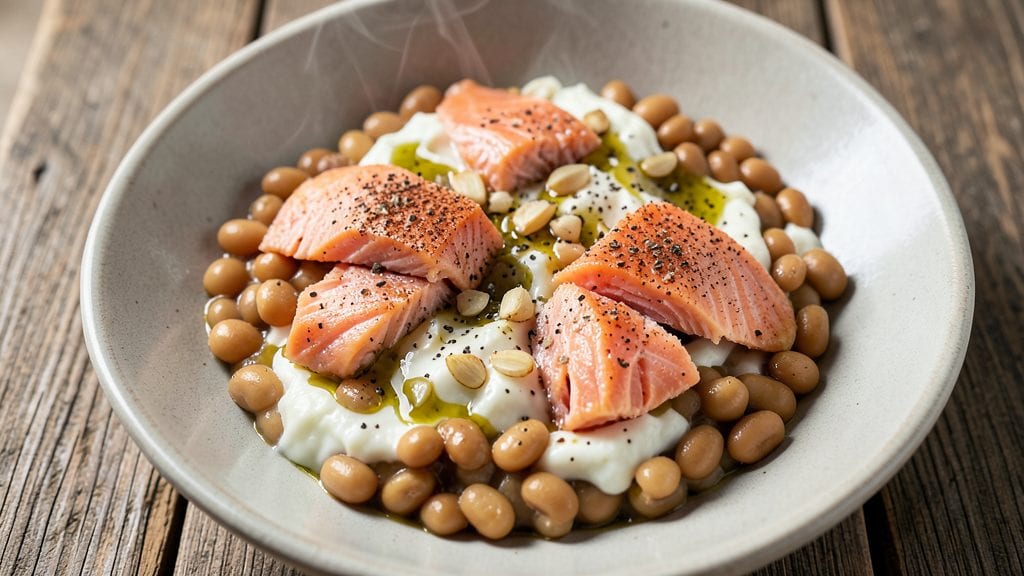
Transforming canned salmon and beans into a smoky, garlicky, textured one-pan dish proves that pantry staples can deliver restaurant-quality meals.
This recipe leverages the natural richness of canned salmon and the hearty bite of beans while adding layers of flavor through crispy toppings and aromatic seasonings—all in under 30 minutes.
The beauty lies in its simplicity: no fancy techniques required, just smart layering of ingredients to create a satisfying, protein-packed meal that feels indulgent.
What makes this dish stand out is the crunchy garlic breadcrumb topping, which adds texture contrast while absorbing the smoky flavors from the salmon and beans. The dish balances protein, fiber, and healthy fats without relying on heavy cream or excessive salt, making it both nutritious and deeply flavorful.
Perfect for weeknights when you want something hearty but don’t have time for elaborate prep, this recipe turns humble canned ingredients into a meal worth savoring.
The result is a one-pan wonder with tender salmon flakes, creamy (but not mushy) beans, and a golden crust that adds a satisfying crunch. Serve it alongside a simple green salad or steamed vegetables to round out the plate, or enjoy it as-is for a complete, protein-rich meal.
The smoky garlic notes linger long after the last bite, making this dish a standout for those who want flavor without the fuss.
This recipe also excels as a make-ahead option: assemble it in advance and bake when ready, or reheat leftovers for an easy lunch.
The combination of canned salmon, beans, and aromatic seasonings creates a dish that’s both budget-friendly and impressive—ideal for feeding a family or meal prepping for the week. Let’s get cooking with this effortless, flavor-packed recipe.
Ingredients for canned salmon and beans
Pantry staples meet restaurant-quality flavor in this one-pan salmon and bean masterpiece.
| Ingredient | Amount | Notes |
|---|---|---|
| Canned Salmon (wild-caught preferred) 🐟 | 2 cans | Drained, flaked with fork |
| Canned White Beans (cannellini or great northern) 🫘 | 2 cans | Drained, rinsed thoroughly |
| Extra-Virgin Olive Oil 🫒 | ½ cup | High-quality, fruity variety |
| Garlic Cloves 🧄 | 6 cloves | Freshly minced, aromatic |
| Smoked Paprika 🌶️ | 1 tbsp | For authentic smoky depth |
| Ground Black Pepper 🌶️ | ½ tsp | Freshly cracked for intensity |
| Diamond Crystal Kosher Salt 🧂 | 1 ½ tsp | Adjust to taste |
| Dried Thyme 🌿 | 1 tsp | Or 1 tbsp fresh thyme leaves |
| Panko Breadcrumbs 🍞 | ½ cup | For crispy texture |
| Parmesan Cheese (freshly grated) 🧀 | ¼ cup | Aged 24+ months preferred |
| Fresh Parsley (optional garnish) 🌿 | 0.1 cup | Chopped finely for brightness |
| Lemon Juice 🍋 | 1 tbsp | Freshly squeezed |
The salmon quality makes all the difference—wild-caught delivers richer flavor and firmer texture than farmed. Trader Joe's and Wild Planet brands excel in this category, with their canned salmon offering vibrant color and minimal fishy aftertaste. For beans, cannellini provides that creamy texture, but great northerns work equally well. Always check labels for BPA-free linings, especially if you're sensitive to chemical exposure. The smoked paprika is non-negotiable here—Penzeys or McCormick Gourmet varieties provide that authentic smoky depth that transforms this into something special.
No smoked paprika? Substitute half the amount with liquid smoke (careful with quantity—it's potent) or increase the regular paprika by 1.5 times. Fresh thyme unavailable? Dried oregano at half the amount works in a pinch, though it lacks that earthy complexity. For the breadcrumb topping, Italian-seasoned panko adds extra flavor without effort. The Parmesan should be freshly grated—pre-shredded contains anti-caking agents that prevent proper melting. If you're avoiding dairy, nutritional yeast provides a similar umami punch. The lemon juice brightens everything, so don't skip it—Meyer lemons add subtle sweetness if you want to elevate further.
This dish reheats beautifully—350°F for 8-10 minutes restores that crispy topping perfectly. Store leftovers in an airtight container for 4-5 days, though the flavor actually improves overnight as components meld. For meal prep, assemble the base (salmon, beans, aromatics) up to 2 days ahead, then add the topping fresh before baking. The breadcrumb mixture can be prepped 3 days ahead and stored in the fridge—just toast it briefly before adding to the pan to restore crispiness. Freeze portions for up to 3 months by wrapping tightly in foil before plastic.
Why You'll Love This Recipe
- Five-Ingredient Magic: I swear, this is the kind of dish where you open a can and suddenly dinner feels intentional. No chopping, no fuss—just drain the salmon, toss in beans, garlic, and a pinch of smoked paprika, then let the olive oil tie it all together. Honestly, I’ve made it on days when I stared at my fridge and had no idea what to eat.
- Umami Bomb: That wild-caught salmon? Rich, buttery, and packed with flavor without any extra work. The smoked paprika adds this smoky depth, while the garlic—just a few cloves, minced right in the pan—turns it into something you’d happily order at a restaurant. Between us, I’ve had people ask what brand of canned salmon I use. (It’s the secret.)
- Lunchbox Hero: This recipe keeps like a champ, so I make a big batch on Sundays and pack it for work. Cold or at room temp, it’s still satisfying—especially with a sprinkle of lemon juice right before eating. My kid brings it to school in a thermos, and my husband eats it straight from the jar. (Yes, even on a Tuesday night.)
- Budget Meal Powerhouse: A can of salmon and a can of beans? That’s less than $5 for a meal that feeds four. I’ll be real: I’ve stretched this into three meals by adding greens one day and turning it into a salad the next. It’s my go-to when groceries are tight, but somehow still feels like a treat.
Step-by-step instructions for smoky garlic crunch in one-pan Magic
This method transforms humble pantry staples into a restaurant-worthy dish with bold flavors and satisfying texture.
Prepare the Base Ingredients
Begin by draining and rinsing the 2 cans of canned white beans thoroughly under cold water to remove any excess sodium. Using a fork, gently flake the 2 cans of canned salmon, removing any noticeable skin or bones. Transfer both to a large mixing bowl and set aside. This prep ensures even distribution of flavors throughout the dish.
In a small bowl, whisk together the 0.5 cup extra-virgin olive oil, 1 tablespoon smoked paprika, 0.5 teaspoon ground black pepper, 1.5 teaspoons diamond crystal kosher salt, and 1 teaspoon dried thyme. This aromatic blend forms the flavor foundation that will permeate every bite. Let the mixture sit for 2 minutes to allow the spices to bloom and release their essential oils.
Build the Flavor Foundation
Heat a large oven-safe skillet over medium heat. Add the minced 6 cloves garlic and sauté for 1-2 minutes until fragrant but not browned—this prevents bitterness. Immediately pour in the prepared spice-oil mixture and stir vigorously for 30 seconds to combine. The skillet should now be coated with a shimmering, aromatic film.
Add the flaked salmon and white beans to the skillet, stirring gently to distribute the flavorful oil evenly. Cook for 3-4 minutes until the salmon begins to warm through and the beans absorb the smoky essence. This step develops the dish's signature depth while maintaining the integrity of the proteins.
Create the Crispy Topping
In a separate bowl, combine the 0.5 cup panko breadcrumbs and 0.25 cup freshly grated parmesan cheese. Sprinkle the mixture evenly over the salmon and bean mixture in the skillet. The panko will create a delightful textural contrast to the creamy salmon and tender beans.
Transfer the skillet to a preheated 375°F oven and bake for 12-15 minutes until the breadcrumb topping is golden brown and crispy. Watch closely during the last 2 minutes—this is when the topping transforms from pale to beautifully browned. The internal temperature should reach 145°F when measured in the thickest part of the salmon.
Finish with Freshness
Remove the skillet from the oven and let it rest for 2 minutes. Stir in the 1 tablespoon freshly squeezed lemon juice and the 0.1 cup finely chopped fresh parsley. The acidity brightens the dish while the parsley adds a fresh herbal note that cuts through the richness.
Taste and adjust seasoning if needed—this is where you can fine-tune the balance between smoky, savory, and bright flavors. Serve immediately while the breadcrumbs are still crisp and the salmon remains warm. The contrast between the creamy salmon, tender beans, and crispy topping makes this dish irresistibly satisfying.
Pro Tips For Making Canned Salmon And Beans
- Crush the Garlic First: I used to just minced garlic straight into the pan, but crushing the cloves with the flat side of your knife before chopping releases more flavor—especially when you’re cooking with salmon and beans where garlic needs to shine. Do this right after heating the olive oil, and let it sizzle for 30 seconds before adding anything else.
- Drain and Rinse the Salmon: That salmon comes packed in oil or water, and if you skip rinsing, you’ll end up with a dish that’s too greasy or watered down. Drain it well, then give it a quick rinse under cold water to cut through any funk from the can—trust me, your taste buds will notice.
- Toast the Paprika Dry: Smoked paprika loses its depth if you just toss it in wet. Heat a dry pan over low heat, add the paprika, and stir for 30 seconds until it smells toasty—this brings out the smoky flavor without burning it. Then mix it into your beans and salmon at the end.
- Simmer the Beans Low: I learned this the hard way—boiling beans too hard makes them mushy and breaks them apart. Instead, warm them gently over medium-low heat with a splash of water or broth, stirring occasionally, until they’re hot through. You want them tender but still holding their shape.
Essential equipment for great canned salmon and beans
Oven-Safe Skillet
An oven-safe skillet is the cornerstone of this recipe—it must handle both stovetop searing and oven baking without warping. I recommend a 12-inch cast iron skillet like the Lodge Pre-Seasoned (about $30) for its superior heat retention and natural non-stick properties after proper seasoning.
For non-stick convenience, a green ceramic-coated skillet from GreenPan (around $40) works beautifully, though avoid high-heat browning to preserve the coating.
If you're on a budget, a stainless steel skillet with a glass lid (like All-Clad Stainless) can double as your oven vessel, though it requires more frequent stirring to prevent sticking. 🔥
Mixing Bowls
Use a medium-sized mixing bowl (about 8-inch diameter) for combining your salmon, beans, and seasonings. I prefer stainless steel bowls from OXO Good Grips (around $15) because they’re durable and easy to clean, but glass bowls work just as well.
For the breadcrumb topping, a small bowl (about 5-inch diameter) is ideal—pyrex measuring cups (around $10) double perfectly for this purpose. Avoid plastic bowls for high-heat applications like garlic sautéing, as they can melt or warp. ✨
Measuring Tools
Precision matters when balancing flavors, so invest in high-quality measuring tools.
A stainless steel measuring spoon set (like Weston Products, around $20) ensures accurate spice measurements, while a digital kitchen scale (such as the OXO Good Grips, around $25) helps weigh ingredients like Parmesan cheese for consistency.
For mincing garlic, a garlic press (like Norpro, around $10) saves time and effort compared to a knife. Don’t skimp here—cheap measuring tools lead to inconsistent results. 💡
Tongs for Serving
Serve this dish with heat-resistant silicone or stainless steel tongs (like OXO Good Grips, around $12) to easily transfer crispy portions without breaking the breadcrumb topping. Avoid metal spatulas, which can scratch your skillet or tear the delicate crust.
For garnishing, a small pair of kitchen shears (like Mercer Culinary, around $15) makes quick work of chopping fresh parsley. These tools elevate the presentation and make serving effortless. 🍽️
Optional: Food Thermometer
While not mandatory, a meat thermometer (like the Thermoworks Smoke, around $30) ensures your salmon reaches the safe internal temperature of 145°F without overcooking. This is especially useful if you’re new to oven-baking proteins.
For those without one, the toothpick test works: insert a clean toothpick into the thickest part of the salmon—it should slide in smoothly when done. 🌡️
Nutrition facts
Frequently asked questions
Can I use different types of beans instead of white beans?
Yes! Cannellini or great northern beans work perfectly, but for a heartier texture, try kidney beans or black beans. Just reduce the liquid slightly if using beans with more natural moisture. Chickpeas add a nutty twist but may require extra seasoning to balance their flavor.
How do I prevent the breadcrumb topping from getting soggy?
Bake the dish on the middle rack of your oven for even heat distribution. For extra crispiness, broil for 1-2 minutes at the end (watch closely!). Also, make sure your breadcrumbs are completely dry before adding them to the pan. A quick toast in a dry skillet first helps too.
Can I make this dish ahead of time?
Assemble everything except the breadcrumb topping up to 2 days ahead and refrigerate. When ready to bake, add the topping and cook as directed. For freezer prep, assemble the base (without topping), portion into containers, and freeze for up to 3 months. Thaw overnight in the fridge before adding fresh breadcrumbs and baking.
What's the best way to reheat leftovers?
Reheat covered in a 350°F oven for 8-10 minutes to restore crispiness. For microwave reheating, cover with a damp paper towel and heat in 30-second bursts, stirring between each. Avoid high heat to prevent the topping from becoming rubbery. The dish actually tastes better the next day as flavors meld!
Can I make this recipe without smoked paprika?
Yes! Substitute with ½ tsp liquid smoke (use sparingly) or 1.5 tsp regular paprika plus a pinch of cinnamon for depth. For a different flavor profile, try 1 tsp dried oregano or a dash of fennel seeds. The key is balancing the smoky element with complementary herbs.