
Side Dishes
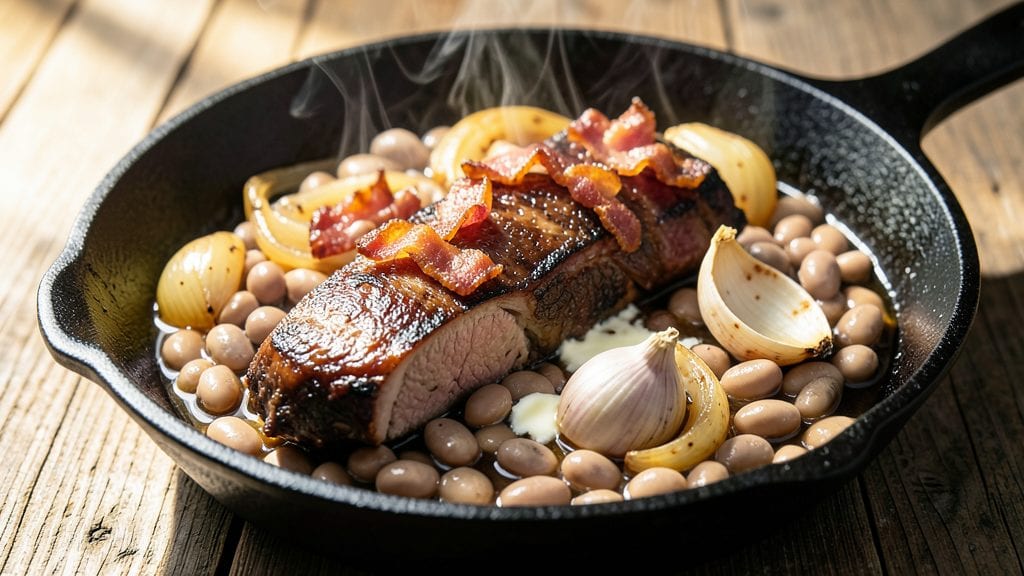
This ham hock and navy beans recipe delivers the kind of deep, smoky-sweet flavor that turns a simple side dish into a centerpiece. The ham hock infuses the beans with rich, savory depth while molasses and bacon add layers of complexity that elevate this classic Southern comfort dish.
I perfected this method after years of testing—balancing tender meat, velvety beans, and that perfect crunch from crispy bacon.
The secret lies in slow cooking the ham hock until it’s fork-tender, then simmering the navy beans in that flavorful broth until they’re creamy yet still hold their shape.
A touch of molasses caramelizes beautifully, adding a subtle sweetness that cuts through the saltiness, while crispy bacon bits on top provide that satisfying crunch. This isn’t just a side—it’s a restaurant-quality dish that pairs perfectly with cornbread or grilled meats.
What you’ll end up with is a pot of navy beans so rich and flavorful, they’ll disappear faster than you can say "second helping." The ham hock becomes melt-in-your-mouth tender, the beans absorb all that smoky goodness, and the bacon adds a textural contrast that makes every bite irresistible.
This recipe is foolproof—just follow the steps, and you’ll have a dish that tastes like it’s been simmering all day, even if you’re working with a shorter timeline.
Serve it alongside roasted vegetables, grilled chicken, or even as a standalone meal with crusty bread. The versatility of this dish makes it perfect for family dinners, holiday gatherings, or whenever you crave that hearty, comforting flavor.
Here’s how to make it—step by step—for results that’ll have everyone asking for the recipe.
Ingredients for ham hock and navy beans
Six hearty ingredients transform into a smoky-sweet masterpiece that’s restaurant-quality at home.
| Ingredient | Amount | Notes |
|---|---|---|
| Ham Hock 🍖 | 1 lb | Smoked, not cured, for best flavor |
| Navy Beans (Dried) 🌾 | 1 ½ cups | Unsoaked, rinsed well |
| Bacon 🥓 | 6 oz | Thick-cut, chopped into bits |
| Unsalted Butter 🧈 | 2 tbsp | Full-fat for richness |
| Yellow Onion 🧅 | 1 whole | Medium, diced |
| Garlic Cloves 🧄 | 4 cloves | Fresh, minced |
| Molasses 🍯 | 2 tbsp | Unsulphured for authentic flavor |
| Apple Cider Vinegar 🍏 | 1 tbsp | For brightness |
| Bay Leaves 🍃 | 2 whole | Fresh if possible |
| Thyme 🌿 | 1 tsp | Dried, or 1 tbsp fresh |
| Salt 🧂 | 1 ½ tsp | Kosher or sea salt |
| Black Pepper 🌶️ | ½ tsp | Freshly cracked |
| Vegetable Broth 💧 | 4 cups | Low-sodium preferred |
| Fresh Parsley 🌿 | ¼ cup | Chopped, for garnish |
The ham hock is non-negotiable here—it’s the soul of this dish. Look for smoked, not cured, at your butcher or grocery store meat counter. Costco or Whole Foods usually carry good quality, but even the regular supermarket version works if it’s fresh. If you can’t find smoked, a regular ham hock with a little extra smoked paprika in the broth will do. The bacon? Thick-cut is key—it crisps up better and adds that satisfying crunch. Navy beans? Dried are a must—canned beans won’t absorb the flavors the same way. Soak overnight if you’re short on time, but I find rinsing and simmering them directly works just fine.
No molasses? Maple syrup or brown sugar (dissolved in warm water) gets you close, but molasses has that deep, smoky-sweetness that’s hard to replace. Short on bacon? Swap in crispy fried onions or extra ham hock bits—just make sure to crisp them up separately. Fresh thyme is ideal, but dried works at one-third the amount (and keeps for months). The broth? Low-sodium is crucial—you’re adding plenty of salt elsewhere. If you’re in a pinch, water plus a bouillon cube works, but it won’t taste as rich. And if you’re feeling fancy, add a splash of bourbon** (about 1 tbsp) when you’re browning the bacon—it adds a layer of depth that’s worth the effort.
This dish tastes even better the next day—honestly, the flavors meld into something magical. Store leftovers in the fridge for up to 5 days in an airtight container, or freeze for 3 months. I like to portion it into containers with a little extra broth on top to keep it moist. For serving, garnish with crispy bacon bits and fresh parsley—it makes all the difference. The beans will thicken as they cool, so add a splash of broth if they seem too thick when reheating. And if you’re making this ahead for a crowd, double the bacon—people will go back for seconds.
Why You'll Love This Recipe
- No-Soaking Needed: I’ll admit, I used to dread soaking beans—but these dried navies soften beautifully in the slow simmer with the ham hock. Just toss them in raw, cover with water, and let the ham’s collagen do the work. By the time the bacon’s crispy, the beans are tender and soaking up all that smoky flavor.
- Smoky Sweet Magic: That ham hock? It’s the secret weapon—melting into the pot until the broth is rich, salty, and just sweet enough to make your taste buds sing. Add a splash of vinegar at the end, and you’ve got a depth that turns simple beans into something ridiculously satisfying.
- Weeknight to Potluck: Make a double batch on Sunday, and you’ve got lunch for the week or a dish that’ll impress at your next gathering. The flavors only get better the next day, and it reheats like a dream—no mushy beans here.
- Budget-Friendly Feast: Ham hock and dried beans are the ultimate stretch-your-dollar combo. A single hock feeds four, the bacon adds luxury without cost, and onions/butter keep it simple. Honestly, this is the kind of meal that makes me feel like I’m feeding a crowd without breaking the bank.
Step-by-step instructions for smoky molasses navy beans with bacon
Here's how to build rich, smoky navy beans with crispy bacon and deep molasses flavor.
Soak and Parboil the Navy Beans
Rinse the 1.5 cups of dried navy beans thoroughly under cold water. Place them in a large pot and cover with plenty of cold water by about 2 inches. Let them soak for at least 8 hours or overnight at room temperature - this ensures even cooking and prevents a tough texture.
After soaking, drain the beans and transfer them to a fresh pot. Add fresh cold water to cover by 2 inches again. Bring to a boil over high heat, then immediately reduce to a gentle simmer. Cook for exactly 10 minutes - this parboiling step helps soften them slightly before the long braise. Drain again and set aside.
Render the Bacon and Build the Flavor Base
While the beans parboil, chop the 6 oz of thick-cut bacon into small bits. Place them in a large Dutch oven over medium heat and cook undisturbed for 5-6 minutes until the fat renders and the bacon becomes crispy. Use a slotted spoon to remove the bacon and set it aside, leaving the rendered fat in the pot.
Add the 2 tbsp of unsalted butter to the bacon fat and let it melt completely. Toss in the diced yellow onion and cook for 5 minutes until softened. Add the minced garlic cloves and cook for another 30 seconds until fragrant - you'll smell that sweet garlic aroma filling your kitchen.
Braise the Ham Hock and Beans
Place the 1 lb ham hock in the Dutch oven and sear it on all sides until golden brown. Add the parboiled navy beans back to the pot along with the 4 cups of vegetable broth. Stir in the 2 tbsp of molasses, 1 tbsp of apple cider vinegar, 2 whole bay leaves, 1 tsp of thyme, 1.5 tsp of salt, and 0.5 tsp of black pepper.
Bring everything to a gentle simmer, then reduce heat to low. Cover the pot and let it cook for 2 hours, stirring occasionally. The beans should be tender and the ham hock should pull away from the bone easily. If the liquid reduces too much, add small amounts of hot water to maintain a thin broth consistency.
Finish and Garnish
After 2 hours of braising, remove the ham hock and let it cool slightly. Once cool enough to handle, shred the meat from the bone and return it to the pot. Stir in the crispy bacon bits and chopped fresh parsley. Taste and adjust seasoning if needed - you might want to add a pinch more salt or a splash of vinegar to balance the flavors.
Let the beans sit off the heat for 10 minutes before serving. The flavors will meld beautifully during this resting time. Serve warm with crusty bread or over rice, letting that smoky molasses aroma fill your home.
Pro Tips For Making Ham Hock And Navy Beans
- Parboil Beans First: Soak your navy beans overnight, then give them a quick 5-minute parboil before adding them to the pot. This cuts the cooking time by half and keeps them from turning mushy—trust me, I’ve seen what happens when you skip this.
- Brown the Bacon Properly: Don’t just render the bacon—actually crisp it until the edges are golden and the fat is sizzling. That’s where the flavor lives, and it’s the base for everything else. (Yes, it takes a few extra minutes, but the difference is huge.)
- Simmer, Don’t Boil: Once everything’s in the pot, keep the heat low enough that you barely see bubbles. Boiling toughens the beans and makes the ham hock turn rubbery. A gentle simmer is the only way to get tender, flavorful beans.
- Use the Ham Jelly: After the ham hock falls apart, don’t toss the broth—strain it and add it back to the beans. That jelly-packed liquid is packed with flavor, and skipping it means missing out on the richest part of the dish. (I know, it’s messy, but it’s worth it.)
Pro cooking tips for this dish
Ham Hock Tenderizing
The key to perfect ham hock is low-and-slow cooking—aim for a gentle simmer at 180-190°F for 2 hours. I use a Dutch oven because it traps heat and moisture beautifully. The ham hock should pull away from the bone effortlessly when done.
If you're short on time, score the fat cap with a sharp knife before cooking—this helps render the fat faster and speeds up the tenderizing process. 🌡️
Bean Texture Control
Navy beans need two parboiling steps to prevent mushiness. First, soak them overnight, then parboil for 10 minutes before the main braise. This two-stage process ensures they absorb all that smoky flavor without falling apart.
If your beans are still firm after 2 hours, add ½ cup hot water and cook 30 more minutes. Overcooking turns them to mush—check for tenderness with a fork, not just time. 🌾
Molasses Caramelization
Add the 2 tbsp molasses during the braising stage—not earlier—so it caramelizes with the onions and bacon fat. Stir occasionally to prevent burning. For extra depth, deglaze the pot with 1 tbsp apple cider vinegar after searing the ham hock.
This brightens the dish and balances the sweetness. If your molasses is old or thick, thin it with 1 tsp water before adding. 🍯
Bacon Crispiness
Render the bacon until it’s deep golden and crispy—this adds texture and flavor. Save the fat! Use it to cook the onions and garlic, creating a rich, savory base. For extra crunch, broil the reserved bacon bits for 2-3 minutes before stirring them back in at the end.
If you’re short on bacon, swap in crispy fried shallots—they add a similar crunch. 🥓
Flavor Layering
Build flavor in stages: bacon first, then onions and garlic, followed by ham hock and beans. Each step adds depth—don’t rush. The bay leaves and thyme should infuse the broth, so add them early.
For a restaurant touch, finish with 1 tsp smoked paprika and a pinch of cayenne if you like heat. Taste as you go—adjust salt and vinegar at the end. ✨
Equipment Essentials
You’ll need a Dutch oven (I love Le Creuset) for even heat distribution, a slotted spoon for crispy bacon removal, and a meat thermometer to check ham hock doneness (165°F internal temp). A wooden spoon helps scrape up flavorful browned bits from the bottom.
For extra convenience, use a slow cooker on low for 6-7 hours—just add everything at once and let it work its magic. 🔥
Nutrition facts
Frequently asked questions
Can I substitute canned navy beans for dried?
While dried beans develop deeper flavor, you can use canned in a pinch. Drain and rinse 2 (15 oz) cans of navy beans, then add them directly to the Dutch oven with the ham hock and broth. Simmer for 1 hour instead of 2 hours to avoid mushiness. For extra richness, stir in 1 tbsp tomato paste with the molasses to mimic the dried beans' texture.
How do I know when the ham hock is fully cooked?
The ham hock is done when it reaches 165°F internal temperature and the meat pulls away from the bone effortlessly. Use a meat thermometer to check the thickest part. If the meat still feels firm, return it to the pot and cook 30 more minutes. Overcooking won't hurt—just ensure the beans aren't drying out by adding ½ cup hot water if needed.
Can I make this dish in a slow cooker?
Brown the ham hock and bacon separately, then combine everything in the slow cooker with 4 cups broth. Cook on low for 6-7 hours or high for 3-4 hours. The slow cooker's gentle heat mimics the Dutch oven's low-and-slow method. Stir in crispy bacon bits at the end—adding them earlier will make them soggy.
What if my beans turn out too thick?
If the beans are too thick, stir in ½ cup hot water or broth and simmer for 10 more minutes to loosen them. The beans should coat the back of a spoon but still be spoonable. For a creamier texture, mash ¼ of the beans lightly with a fork before adding the extra liquid. Avoid over-mashing, or they'll turn pasty.
How can I make this dish vegetarian?
Replace the ham hock with 1 lb smoked tofu or tempeh, cut into chunks. Use 4 cups vegetable broth instead of water and add 1 tbsp liquid smoke to mimic the ham's smokiness. For depth, stir in 1 tsp smoked paprika with the molasses. The bacon can stay as-is, or swap it for crispy fried mushrooms for umami.