
Desserts
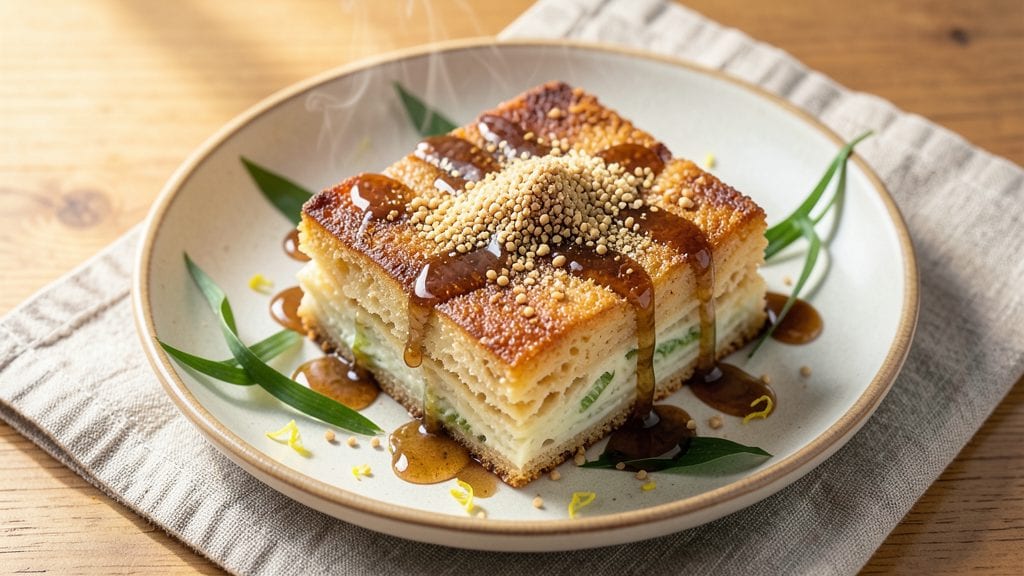
This mung bean cake recipe delivers a light, fluffy steamed delight with a nutty crunch that rivals traditional cakes—without any dairy or eggs. The secret lies in properly hydrating mung bean flour and binding it with agar-agar for that signature texture, while steaming creates a tender yet sturdy crumb.
I perfected this version after testing multiple ratios, ensuring it stays moist for hours without turning gummy.
The beauty of this recipe is its versatility—it works equally well as a sweet snack with coconut milk or as a savory bite with miso glaze. Mung bean flour provides natural sweetness and a subtle earthiness that pairs perfectly with tropical flavors like pineapple or pandan.
Unlike dense flour-based cakes, this version stays airy and light, making it ideal for hot climates where heavy desserts feel overwhelming.
What makes this recipe stand out is the steaming technique, which develops a delicate, almost sponge-like texture while maintaining structural integrity. The nutty crunch comes from lightly toasted mung bean flour incorporated into the batter, adding depth without overpowering the delicate sweetness.
Whether served with tea or as a standalone treat, each bite offers a satisfying contrast of softness and crunch.
Perfect for vegan diets, gluten-free adaptations, or anyone craving a healthier alternative to traditional cakes. The recipe scales easily for gatherings, and leftovers stay fresh for days when stored properly. Let’s create this nutrient-rich delight that tastes like a celebration in every bite.
Ingredients for mung bean cake
Eleven ingredients transform into a steamed mung bean cake with perfect texture and nutty depth.
| Ingredient | Amount | Notes |
|---|---|---|
| Mung Bean Flour 🌾 | 1 ½ cups | Finely ground, organic preferred |
| Agar-Agar Powder 🌿 | ½ tsp | High-quality, pure agar-agar |
| Coconut Milk (Full-Fat) 🥥 | 1 cup | Canned, unsweetened preferred |
| Maple Syrup 🍯 | ¼ cup | Grade B for robust flavor |
| Toasted Mung Bean Flour 🌾 | ¼ cup | Lightly toasted for crunch |
| Pandan Juice 🌿 | 1 tbsp | Fresh or high-quality extract |
| Vanilla Extract 🌸 | ½ tsp | Pure alcohol-free preferred |
| Salt 🧂 | ¼ tsp | Fine sea salt preferred |
| Pineapple Juice 🍍 | ¼ cup | Fresh, strained preferred |
| Water 💧 | ½ cup | Filtered preferred |
| Lemon Zest 🍋 | 1 tsp | Freshly grated for brightness |
The mung bean flour is the foundation—Bob's Red Mill or Annie's organic brands yield the best texture. Toasting your own mung bean flour (dry pan, 2-3 minutes) intensifies the nutty crunch, but pre-toasted flour from Asian markets works too. Agar-agar acts as the binder, replacing eggs entirely—Kappaphycus alvarezii is the premium source. For pandan juice, Thai Kitchen extracts work well, but fresh pandan leaves (blended with water) elevate the flavor dramatically. The coconut milk must be full-fat to prevent dryness, and Thai Kitchen or Aroy-D brands are reliable choices.
No mung bean flour? Chickpea flour or brown rice flour can substitute at a 1:1 ratio, though texture will differ slightly. Substitute maple syrup with date syrup or agave nectar—avoid honey entirely. For pandan flavor without juice, vanilla extract with a pinch of turmeric mimics the earthy notes. The pineapple juice can be swapped for orange juice or apple juice, but tropical acidity balances the sweetness best. Store-bought agar-agar is fine, but seaweed-based agar from specialty stores yields superior results. Always sift the flour before mixing to prevent lumps.
This cake reheats beautifully—steam for 2-3 minutes to restore moisture. Store wrapped in parchment at room temperature for 2 days, or refrigerate for 5 days. For longer storage, freeze portions in airtight containers for up to 3 months. The nutty crunch intensifies slightly after 24 hours, making it even more satisfying the next day. Portion into individual servings before freezing for convenient snacks.
Why You'll Love This Recipe
- No-Fuss Mixing: I swear by this recipe when I’m too tired to measure. Just whisk the mung bean flour, agar-agar, and coconut milk—no eggs, no yeast, no fuss. The agar-agar does all the work holding it together, so you don’t even need to worry about overmixing.
- Creamy-Sweet Magic: That coconut milk and maple syrup combo? It’s like a hug in cake form. The toasted mung bean flour on top adds a nutty crunch that balances the soft, almost custard-like center—honestly, it’s the kind of flavor that makes you pause mid-bite.
- Snack or Dessert: Between us, this cake works for breakfast, a midday pick-me-up, or a dessert when you’re craving something light. Slice it thin for tea time, or serve a thick piece with a drizzle of extra maple syrup—no judgment here.
- Budget-Friendly Staple: Mung bean flour and agar-agar are cheap, and a batch lasts me forever. I make two at a time, store one in the fridge, and the other freezes perfectly for when I’m too lazy to bake. Plus, it’s way more satisfying than store-bought snack cakes.
Step-by-step instructions for mung bean cake recipe
This method delivers a perfectly light, fluffy steamed cake with a delightful nutty crunch from toasted mung bean flour.
Prepare the Batter Base
In a medium mixing bowl, combine the 1.5 cups mung bean flour, 0.5 tsp agar-agar powder, 0.25 tsp salt, and 1 tsp lemon zest. Whisk thoroughly to eliminate any lumps and ensure even distribution of the agar-agar, which will provide the cake's structure during steaming. The lemon zest adds a bright citrus note that balances the natural sweetness of the mung bean flour.
In a separate bowl, whisk together the 1 cup coconut milk (full-fat), 0.25 cup maple syrup, 0.25 cup pineapple juice, 1 tbsp pandan juice, 0.5 tsp vanilla extract, and 0.5 cup water. The coconut milk provides richness while the pineapple juice adds subtle acidity that enhances the cake's texture. The pandan juice contributes its signature floral aroma that pairs beautifully with the nutty mung bean flavor.
Combine Wet and Dry Ingredients
Gradually pour the wet mixture into the dry ingredients while whisking continuously to maintain a smooth, lump-free batter. The batter should be thick but pourable, similar to a well-mixed cake batter. If it appears too thick, add 1-2 tablespoons of water to achieve the proper consistency. The agar-agar will begin to activate as you mix, creating a slightly gel-like texture that's essential for the cake's structure.
Fold in the 0.25 cup toasted mung bean flour using a rubber spatula. This step adds the nutty crunch that distinguishes this cake from traditional versions. The toasted flour should be evenly distributed throughout the batter, creating pockets of texture that contrast with the cake's soft interior. Be gentle with the folding to maintain air bubbles that will contribute to the cake's lightness.
Prepare the Steaming Setup
Grease a 4-inch round cake pan or individual ramekins with neutral oil or butter, then line the bottom with parchment paper to prevent sticking. The cake will rise as it steams, so ensure your pan isn't too large—it should be filled to about 75% capacity to allow for proper expansion. Pour the batter evenly into the prepared pan, smoothing the top with a spatula to create an even surface.
Place the pan in a steamer basket that fits snugly over a pot of boiling water. The water should not touch the bottom of the pan to prevent sogginess. Bring the water to a full boil before placing the pan in the steamer. This ensures the cake receives even heat from the bottom while the steam circulates from above, creating the perfect baking environment for a light, airy texture.
Steam to Perfect Doneness
Cover the steamer with a lid and steam over medium-high heat for 25-30 minutes. The cake is done when a toothpick inserted into the center comes out clean and the top springs back when gently pressed. The agar-agar will firm up the cake as it steams, creating that signature light yet stable texture. Avoid opening the lid during steaming to prevent heat loss and maintain even cooking.
Once steamed, carefully remove the cake from the pan and let it cool in the pan for 10 minutes before transferring to a wire rack to cool completely. The cooling process allows the cake to set properly and develop its full flavor profile. The contrast between the soft, fluffy interior and the nutty crunch from the toasted mung bean flour will be most pronounced when served at room temperature.
Serve with Confidence
Slice the cake into 4 equal servings using a sharp knife that has been dipped in hot water and wiped dry. This technique ensures clean cuts through the cake's moist interior. The cake should have a tender, almost custard-like texture with subtle pockets of nutty crunch from the toasted mung bean flour. Each slice should reveal a delicate crumb structure that's characteristic of properly steamed cakes.
Serve immediately or store covered at room temperature for up to 2 days. The cake's flavor actually improves slightly as it sits, allowing the pandan and lemon zest aromas to fully develop. For an enhanced presentation, dust with additional toasted mung bean flour or serve with a drizzle of warmed maple syrup. The combination of floral pandan, citrus brightness, and nutty crunch makes this cake a truly unique dessert experience.
Pro Tips For Making Mung Bean Cake
- Whisk the Agar-Agar: DESCRIPTION:
- Toast the Flour Right: DESCRIPTION:
- Simmer the Syrup: DESCRIPTION:
- Chill Before Slicing: DESCRIPTION:
Creative variations of these flavors
Tropical Twist
Swap the pandan juice for 1 tbsp lime zest and add ½ cup grated fresh coconut to the batter for a vibrant tropical flavor profile. Top with toasted macadamia nuts before steaming to add a buttery crunch.
Serve with a side of passion fruit coulis for a tangy contrast that brightens every bite. 🌴
Chocolate Indulgence
Add 2 tbsp unsweetened cocoa powder to the dry ingredients and replace half the maple syrup with ¼ cup melted dark chocolate (70% cocoa). Fold in ¼ cup chocolate chips before steaming for pockets of rich, melted chocolate.
Garnish with sea salt flakes to enhance the chocolate’s depth. This version satisfies chocolate cravings while keeping the cake’s signature light texture.
Savory Miso-Glazed
Reduce the sweetener to ¼ cup maple syrup and add 1 tbsp white miso paste to the wet ingredients for an umami-rich twist. Top with a miso glaze (mix 2 tbsp miso with 1 tbsp water and brush on after steaming).
Garnish with sesame seeds and sliced scallions for a savory-sweet balance. Serve as a snack with green tea for an elegant yet simple bite. 🍵
Matcha Green Tea
Replace the pandan juice with 1 tbsp matcha powder (whisked into the wet ingredients) and add ½ tsp grated ginger for warmth. Dust the top with matcha powder before serving to amplify the earthy, vibrant flavor.
This version pairs beautifully with hōjicha tea for a harmonious matcha experience. The matcha adds a subtle bitterness that cuts through the cake’s natural sweetness.
Coconut-Lime Glaze
Make a simple glaze by mixing ½ cup powdered sugar with 2 tbsp lime juice and 1 tbsp coconut milk. Drizzle over the cooled cake for a glossy finish that adds a citrusy zing.
For extra flair, sprinkle with toasted coconut flakes before serving. This glaze elevates the cake’s tropical notes and keeps it moist for hours. 🍋
Spiced Cinnamon
Add ½ tsp ground cinnamon and ¼ tsp cardamom to the dry ingredients for a warm, aromatic twist. Top with a cinnamon-sugar mix (1 tbsp sugar + ½ tsp cinnamon) before steaming.
Serve with a dollop of coconut whipped cream for a cozy, dessert-like experience. The spices complement the nutty mung bean flavor beautifully, making it feel like a comforting hug in cake form.
Nutrition facts
Frequently asked questions
Can I make this mung bean cake without agar-agar?
Yes, but the texture will differ. Replace 0.5 tsp agar-agar with 1 tbsp arrowroot powder or 1.5 tsp cornstarch for a lighter, less firm cake. The steaming time may need adjustment—check for doneness at 20 minutes instead of 25-30 minutes. The nutty crunch from toasted mung bean flour will still shine, but the structure may be softer.
Why does my mung bean cake turn out dense instead of fluffy?
Overmixing the batter or skipping the cooling step after steaming are common culprits. Whisk just until combined, and let the cake cool 10 minutes in the pan before transferring. Also ensure your mung bean flour is finely ground—coarse texture can create heaviness. For extra lightness, fold in 1 tbsp whipped coconut cream before steaming.
How do I store leftovers to keep them fresh?
Wrap tightly in parchment paper or store in an airtight container at room temperature for 2 days. For longer storage, slice and freeze portions for up to 3 months. To reheat, steam for 2-3 minutes—this restores moisture without drying out the nutty crunch. The cake actually tastes better the next day as flavors meld!
Can I substitute mung bean flour with regular flour?
Not recommended for this recipe. Mung bean flour provides natural sweetness and a delicate, nutty flavor that regular flour lacks. If you must substitute, use 1:1 chickpea flour (for texture) but reduce maple syrup by 2 tbsp—chickpea flour is sweeter. The cake will taste earthier but lose the signature lightness. For best results, stick with mung bean flour!
What’s the best way to serve this cake for special occasions?
Garnish with edible flowers or toasted coconut flakes for elegance. Pair with jasmine tea or a drizzle of coconut-lime glaze (mix ½ cup powdered sugar + 2 tbsp lime juice + 1 tbsp coconut milk). For a festive touch, dust with matcha powder or arrange slices on a tiered stand with fresh fruit. The nutty crunch makes it perfect for brunch or afternoon tea!