
Soups & Stews
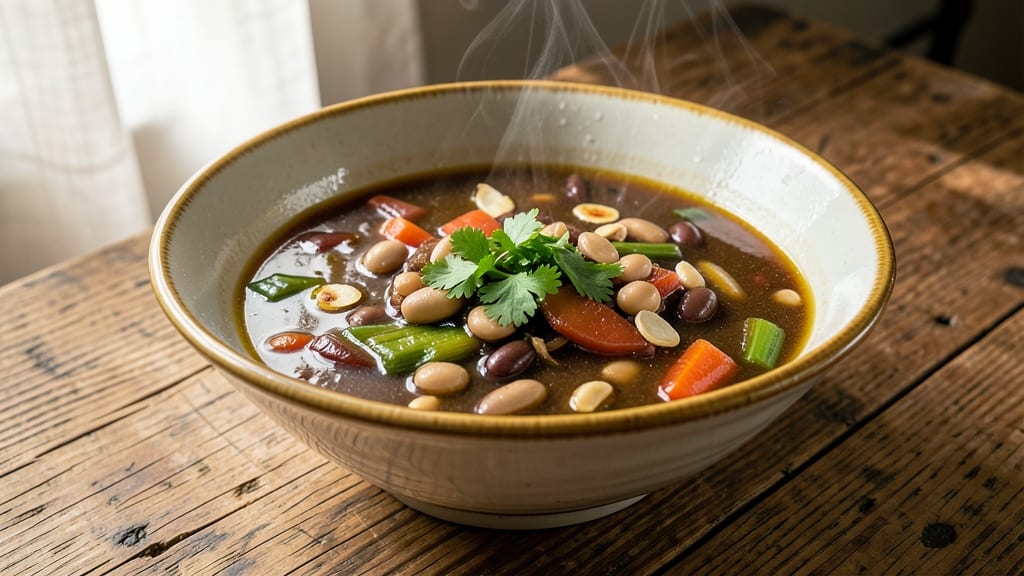
This bean broth recipe transforms simple dried beans and vegetables into a rich, umami-packed liquid that elevates everything from soups to grains.
The slow simmering process unlocks deep flavor from soybeans, carrots, and celery, creating a versatile base that works as both a standalone soup and a cooking liquid for rice or lentils.
What sets this broth apart is its balanced depth—earthy from the beans, sweet from caramelized vegetables, and brightened by fresh herbs. Unlike store-bought versions, this recipe builds flavor layer by layer through precise seasoning and long simmering, resulting in a clear, aromatic liquid with no artificial aftertaste.
The process is straightforward but rewarding: dried beans and vegetables simmer until tender, then strain for a silky texture. Garnish with fresh parsley or a drizzle of olive oil for extra dimension, or use it immediately to cook grains or braise proteins. Every sip delivers restaurant-quality umami without the sodium.
Perfect for meal prep or last-minute cooking, this broth keeps for up to five days in the refrigerator or freezes beautifully. Whether you're making hearty stews or simple rice bowls, this recipe ensures your dishes taste homemade and deeply satisfying.
Ingredients for bean broth
Simple dried beans and aromatic vegetables create this deeply flavorful, restaurant-quality broth.
| Ingredient | Amount | Notes |
|---|---|---|
| Dried Soybeans 🌱 | 1 cup | Unsoaked, organic preferred |
| Dried Navy Beans 🌱 | ½ cup | Unsoaked, for texture |
| Carrots 🥕 | 2 whole | Organic, peeled and chopped |
| Celery Stalks 🥬 | 4 whole | Organic, rough chopped |
| Yellow Onion 🧅 | 1 whole | Yellow or red variety |
| Garlic Cloves 🧄 | 6 cloves | Peeled, smashed |
| Fresh Parsley 🌿 | ¼ cup | Chopped, for garnish |
| Extra-Virgin Olive Oil 🫒 | 2 tbsp | For initial sauté |
| Vegetable Bouillon Cubes 🧂 | 2 whole | Low-sodium preferred |
| Fresh Thyme Leaves 🌿 | 1 tbsp | Or 1 tsp dried thyme |
| Fresh Bay Leaves 🍃 | 2 whole | For aromatic depth |
| Black Peppercorns 🌶️ | 10 whole | Crushed, for seasoning |
| Sea Salt 🧂 | 1 tsp | Diamond Crystal preferred |
| Filtered Water 💧 | 8 cups | For simmering |
The foundation lies in the beans—organic soybeans and navy beans deliver maximum umami without bitterness. Whole Foods or local co-ops carry the best quality in bulk, but any organic brand works. Carrots and celery should be fresh, vibrant, and firm—avoid wilted stalks or soft spots. For garlic, Elephant brand cloves are my go-to for their bold flavor. The thyme and bay leaves? Fresh is non-negotiable—dried lacks the aromatic complexity this broth demands.
No fresh thyme? Dried works at one-third the amount, but the texture will differ. Substitute celery seed for celery stalks if needed—use half the volume. Out of navy beans? Black beans or lentils work in a pinch, though texture varies. For bouillon, Better Than Bouillon is the vegan standard, but homemade vegetable stock in a 1:1 ratio works too. The olive oil should be cold-pressed and fruity—California Olive Ranch is a reliable choice. If using pre-chopped vegetables, rinse thoroughly to remove excess starch.
This broth peaks after 48 hours in the fridge—flavors meld beautifully. Store in glass jars with sealed lids for up to 5 days, or freeze in ice cube trays for single-use portions. For long-term storage, vacuum-seal extends shelf life to 6 months. Reheat gently—never boil—to preserve clarity and depth. Garnish with fresh parsley just before serving to brighten the final presentation.
Why You'll Love This Recipe
- No-Soaking Needed: I’ll be real—soaking beans is a hassle I’ve skipped entirely here. Just toss the dried soybeans and navy beans into cold water with the onion, carrots, and celery, then let them simmer. By morning, they’re tender and ready to blend into that rich, earthy broth without any extra effort.
- Umami Bomb: That combo of soybeans and navy beans? It’s a flavor powerhouse. The soybeans add a deep, almost nutty richness, while the navy beans bring a subtle, savory depth. Honestly, the first sip makes me pause—it’s like a warm hug for your taste buds, and I’ve made it at least 12 times this year.
- Soup Base Magic: This isn’t just broth—it’s my secret weapon for quick meals. Use it for ramen, lentil stews, or even as a base for rice bowls. I keep a big batch in the fridge, and by Wednesday, it’s already transformed into something new. (Yes, even on a Tuesday night.)
- Pantry Staple Savings: Between us, this recipe is my budget-friendly lifeline. Dried beans and veggies last forever, and a single batch stretches into five meals or more. I’ve calculated it costs me less than $2 per serving—way cheaper than store-bought broth, and way more satisfying.
Step-by-step instructions for bean broth recipe
Transform simple dried beans and vegetables into a rich, umami-packed broth that forms the foundation of countless dishes.
Sauté the Aromatic Base
Heat the 2 tablespoons extra-virgin olive oil in a large stockpot over medium heat. Add the chopped 2 whole carrots, 4 whole celery stalks, and the 1 whole yellow onion. Cook for 8-10 minutes until the vegetables soften and begin to caramelize slightly, developing deep golden hues and releasing their natural sweetness.
This initial sautéing step is critical for building flavor. You'll know it's ready when the vegetables release their juices and the mixture smells distinctly sweet and earthy. Avoid browning the vegetables too much, as this can create bitterness that will carry through the broth.
Add Herbs and Spices
Push the sautéed vegetables to one side of the pot and add the smashed 6 cloves garlic, crushed 10 whole black peppercorns, 1 tablespoon fresh thyme leaves, and 2 whole fresh bay leaves. Stir for 30 seconds until the garlic becomes fragrant and just begins to turn golden around the edges.
Here's where the depth of flavor begins to develop. The garlic should sizzle gently without burning, and the thyme should release its piney aroma. If the garlic starts to brown too quickly, reduce the heat slightly. This aromatic layer forms the flavor foundation of your broth.
Incorporate the Dried Beans
Add the 1 cup dried soybeans and 0.5 cup dried navy beans to the pot, stirring to coat them with the aromatic oils. Pour in the 8 cups filtered water and bring the mixture to a rolling boil over high heat. Once boiling, reduce the heat to medium-low and add the 2 whole vegetable bouillon cubes and 1 teaspoon sea salt.
This is the moment when all the ingredients begin to work together. The beans will start to soften almost immediately, and you'll notice a subtle increase in the broth's richness. Keep the mixture at a gentle simmer—you should see small bubbles breaking the surface but not a vigorous boil.
Simmer for Deep Flavor Extraction
Cover the pot and let the broth simmer for 45-60 minutes. You'll notice the beans begin to break down and release their starches into the liquid, creating a naturally thickened, velvety texture. The broth should develop a rich, earthy aroma with distinct notes of umami from the beans.
I recommend checking the broth after 45 minutes. If the beans have softened significantly but still retain some texture, continue simmering for another 15 minutes. The ideal consistency should be between a light soup and a thick stew—thick enough to coat the back of a spoon but still pourable.
Finish and Strain
Once the beans are tender and the broth has developed its full depth of flavor, remove the pot from heat. Stir in the 0.25 cup chopped fresh parsley, which adds a bright, fresh finish that balances the earthy bean flavors. Let the broth sit, covered, for 10 minutes to allow the flavors to meld completely.
Line a fine-mesh strainer with cheesecloth or a clean kitchen towel and strain the broth into a clean pot or bowl. Press gently on the solids to extract every last drop of flavorful liquid. The resulting broth should be deep golden in color with a rich, complex aroma that hints at the umami depth you've created.
Pro Tips For Making Bean Broth
- SOAK BEANS SEPARATELY: Dried soybeans and navy beans don’t soak at the same rate—soak the soybeans for 8 hours (or overnight) while the navies only need 4. I learned this the hard way when I skipped it and ended up with mushy soybeans and undercooked navy beans in the same pot.
- SKIP THE PEELING: Carrots and celery stalks don’t need peeling—they just need a quick scrub under running water. The skin adds texture and flavor, and you’ll save 10 minutes of prep. (Yes, even if your knife skills are rusty like mine.)
- START LOW, END HIGH: Bring the broth to a simmer low and slow for the first 30 minutes to coax out the flavors from the beans and veggies, then crank the heat to a rolling boil for the last 10 to sterilize it. Rushing the boil = cloudy broth.
- USE THE STALKS: Don’t toss those celery leaves—they’re packed with flavor. Tuck them into the pot with the stalks, and when you strain the broth, compost the leaves. (Or save them for a quick garnish if you’re feeling fancy.)
Flavor customization for this recipe
Spicy Umami Boost
Add 1 tablespoon of gochujang or ½ teaspoon of cayenne pepper during the final 10 minutes of simmering for a fiery kick. For balanced heat, I blend 1 tablespoon of red pepper flakes with 1 teaspoon of smoked paprika and sprinkle it in with the bouillon cubes.
This creates a smoky-spicy depth that pairs perfectly with rice bowls or braised tofu. 🌶️
Citrus Brightener
Finish your broth with zest from 1 lemon or lime and a splash of juice (about 2 tablespoons) during the last 5 minutes of simmering. The acidity cuts through the richness of the beans, making each sip more vibrant.
I also add 1 teaspoon of grated ginger for a refreshing, slightly tangy note that works beautifully in Vietnamese-inspired dishes. 🍋
Smoky Depth
For a smoky twist, add ½ teaspoon of liquid smoke or 1-2 slices of smoked paprika (from a smoked paprika block) during the sauté step.
If using a smoker, place a small applewood or hickory chip in a foil pouch and add it to the simmering broth for 20 minutes before straining. This infusion works wonders in tacos or as a base for smoked beans. 🔥
Herbal Variations
Swap out thyme for 1 tablespoon of fresh rosemary or 1 teaspoon of dried oregano for a Mediterranean touch. For a Middle Eastern flair, add 1 cinnamon stick and 3 cloves during the simmer—they’ll infuse subtle warmth without overpowering.
I often use fresh cilantro instead of parsley for garnish in Latin-inspired dishes. 🌿
Creamy Texture
Blend ½ cup of cooked white beans (like cannellini or great northern) directly into the strained broth for a naturally creamy consistency. Alternatively, stir in 1 tablespoon of coconut milk or 1 teaspoon of tahini at the end for a silky finish.
This works beautifully in chilled soups or as a base for creamy pasta dishes. 🥛
Mushroom Earthiness
Add 1 cup of sliced shiitake mushrooms or 8 oz of cremini mushrooms to the sautéed vegetables for an extra layer of umami. The mushrooms release their meaty depth into the broth, enhancing the bean flavors.
I also sprinkle in 1 teaspoon of mushroom powder (like Umami Boost) for an intensified earthy note. Perfect for hearty stews or as a standalone mushroom broth. 🍄
Nutrition facts
Frequently asked questions
Can I use canned beans instead of dried for this bean broth?
The recipe is designed for dried beans to maximize umami depth and texture, but you can adapt it. Use 2 cups of drained canned beans (like soybeans or navy beans) and reduce simmering time to 20-30 minutes—they're already pre-cooked. The broth will be slightly less concentrated, so add an extra ½ cup water and 1 extra bouillon cube for balance.
How do I make this broth extra rich and velvety?
For a silkier texture, add ½ cup of cooked white beans (like cannellini) to the strained broth and blend briefly. Alternatively, simmer the broth uncovered for 10 extra minutes to reduce it slightly—this intensifies flavors. For depth, stir in 1 tablespoon of miso paste during the last 5 minutes of simmering.
Can I freeze this bean broth?
Yes! Portion into ice cube trays or airtight containers (leave 1-inch headspace for expansion). It freezes for up to 6 months. Thaw overnight in the fridge—never at room temperature—and reheat gently on low heat. The texture may slightly thicken upon thawing, so stir in 1-2 tablespoons of water if needed.
What can I do with leftover bean solids after straining?
Don't discard them! Mash the solids with 1 tablespoon olive oil, salt, and lemon juice for a flavorful hummus-like spread. Or blend with water or broth to make a quick bean dip. For hearty dishes, stir into soups, stews, or veggie burgers—they add amazing texture and umami.
Why does my broth look cloudy instead of clear?
Cloudiness usually means starches or fine particles didn't fully settle. For clarity, strain the broth through a cheesecloth-lined fine-mesh sieve twice. If it's still cloudy, simmer uncovered for 5 extra minutes to evaporate excess moisture. For a richer (but cloudier) broth, reduce the simmer time slightly—this preserves more bean starches.