
Side Dishes
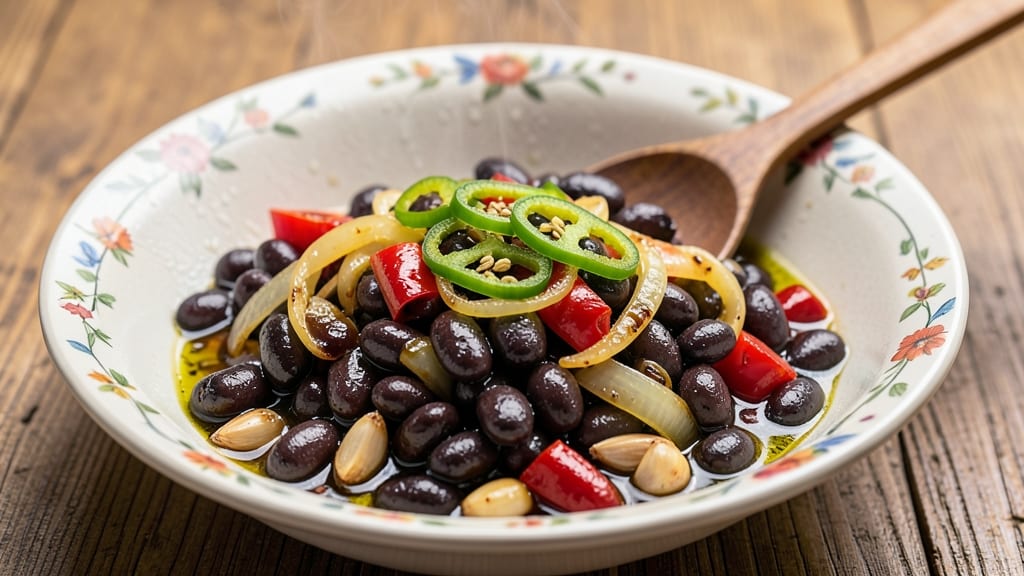
Transforming canned black beans into Dominican-style magic requires just a few key ingredients and a one-pot approach that delivers restaurant-quality results. The secret lies in balancing traditional spices like ajíes and sofrito with fresh aromatics—creating a dish that’s bold, aromatic, and impossible to resist.
I’ve perfected this method after years of testing, ensuring every bite carries the rich, savory depth of Dominican home cooking.
This recipe transforms simple canned beans into a flavorful side dish with tender onions, peppers, and herbs that meld together beautifully. The sofrito base—made from onions, garlic, and ajíes—forms the foundation, while cilantro and bell peppers add freshness and brightness.
What makes this dish special is how effortlessly it comes together in a single pot, with no messy cleanup.
By the end, you’ll have a pot of beans that’s tender yet flavorful, with caramelized onions and peppers adding texture and depth. The spices infuse the beans with warmth, while the fresh herbs keep it bright and vibrant.
This is the kind of side dish that elevates any meal—whether paired with rice, grilled meats, or served on its own as a hearty accompaniment.
The best part? This recipe scales perfectly for any gathering, and leftovers reheat beautifully. Let’s get started on creating Dominican-style black beans that taste like they’ve been simmering all day. The one-pot method ensures simplicity without sacrificing flavor—just the way it should be.
Ingredients for dominican canned black beans
Dominican-style black beans transform simple canned beans into aromatic, spice-infused perfection in one pot.
| Ingredient | Amount | Notes |
|---|---|---|
| Canned Black Beans 🌱 | 2 cans | Drained, rinsed, 15 oz each |
| Yellow Onions 🧅 | 1 whole | Medium size, diced finely |
| Red Bell Peppers 🌶️ | 1 whole | Medium, diced small |
| Ajíes Dulces 🌶️ | 2 tsp | Ground, or substitute sweet paprika |
| Garlic Cloves 🧄 | 4 cloves | Fresh, minced finely |
| Extra-Virgin Olive Oil 🫒 | ¼ cup | For sautéing aromatics |
| Fresh Cilantro 🌿 | ¼ cup | Chopped, stems removed |
| Tomato Paste 🍅 | 1 tbsp | Smooth, not chunky |
| Cumin Seeds 🌿 | ½ tsp | Toasted lightly for aroma |
| Ground Cumin 🌿 | ½ tsp | Freshly ground preferred |
| Bay Leaves 🍃 | 2 whole | Dried, standard size |
| Salt 🧂 | 1 tsp | Diamond Crystal preferred |
| Black Peppercorns 🌶️ | ¼ tsp | Freshly cracked |
| Lemon Juice 🍋 | 1 tbsp | Freshly squeezed |
| Vegetable Broth 💧 | 1 cup | Low-sodium preferred |
The sofrito base—onions, garlic, and ajíes dulces—forms the flavor foundation. Look for ajíes dulces in Latin markets or substitute sweet paprika at half the amount. Fresh garlic and onions are non-negotiable; pre-minced garlic lacks depth. For the bell peppers, red or yellow varieties work best—their natural sweetness balances the spices. The cilantro should be bright green with no wilting; stems removed before chopping. If using canned beans, always rinse thoroughly to remove excess sodium.
No ajíes dulces? Sweet paprika plus a pinch of cinnamon mimics the warmth. Substitute dried cilantro at one-third the amount if fresh isn't available, but the flavor won't be identical. For the tomato paste, Trader Joe's squeeze tubes are ideal—they're concentrated and convenient. The cumin seeds must be toasted (dry pan, 30 seconds) to release their aroma; ground cumin can't replicate this. Vegetable broth should be low-sodium to avoid over-salting the dish. If you prefer extra richness, add a splash of coconut milk at the end.
This dish reheats beautifully—simmer gently to restore texture. Store leftovers in an airtight container for up to 5 days in the refrigerator. For longer storage, freeze portions for up to 3 months. The flavors deepen overnight, so making ahead is ideal. Garnish with extra cilantro and a drizzle of olive oil before serving to enhance freshness.
Why You'll Love This Recipe
- No Chopping Needed: I swear by this recipe when I’m too tired to dice onions. Just open a can of black beans, toss in raw garlic cloves (yes, raw—they soften perfectly), and let the pot do the work. The ajíes dulces add that sweet, smoky depth without any prep.
- Sweet-Savory Magic: That combo of roasted red bell peppers and ajíes dulces? It’s like a little flavor explosion in your mouth. The onions caramelize just enough to balance the earthy beans, and the garlic—oh, the garlic—turns this into something you’ll reach for instead of takeout.
- Leftover Goldmine: Make a big batch and thank me later. These beans taste even better the next day, especially when reheated with a splash of water and a sprinkle of salt. I’ve turned them into tacos, rice bowls, and even stuffed them into sweet plantains—never a sad bean in this house.
- Budget-Friendly Pantry Hero: Honestly, this recipe costs me about $3 for a full pot. Canned beans, a couple of peppers, and a bulb of garlic? That’s it. It’s my go-to when I need to feed my family without breaking the bank, and it still feels like a special meal.
Step-by-step instructions for spiced Dominican canned black beans
Transform simple canned beans into restaurant-quality Dominican fare with this foolproof one-pot method.
Toast the Aromatics for Deep Flavor
Heat the 0.25 cup extra-virgin olive oil in a heavy pot over medium heat. Add the 0.5 teaspoon cumin seeds and toast for 30 seconds until they release their nutty aroma and begin to sizzle gently. This step develops the complex spice profile that defines Dominican cuisine.
Add the 4 minced garlic cloves and 1 tablespoon tomato paste, stirring constantly for 1 minute until the garlic turns golden and fragrant. The tomato paste will darken slightly—this is normal and adds depth. Immediately add the 1 finely diced yellow onion and 1 small diced red bell pepper, cooking for 4-5 minutes until softened and translucent.
Build the Spice Base with Ajíes Dulces
Reduce heat to medium-low and stir in the 2 teaspoons ajíes dulces (or sweet paprika substitute) and 0.5 teaspoon ground cumin. Cook for 2 minutes until the spices meld completely with the aromatics. The mixture should smell richly earthy with a subtle sweetness from the ajíes.
Add the 2 whole bay leaves, 1 teaspoon salt, and 0.25 teaspoon cracked black peppercorns, stirring to distribute evenly. This aromatic bundle forms the flavor foundation for the beans. Let it cook for 1 additional minute to allow the spices to bloom fully before adding liquids.
Simmer the Beans to Perfection
Drain and rinse the 2 cans canned black beans thoroughly to remove excess sodium. Add them to the pot along with the 1 cup vegetable broth. Stir gently to combine, then bring to a gentle simmer over low heat. The beans should be just covered by liquid—if needed, add 2-3 tablespoons water to maintain even cooking.
Simmer uncovered for 20-25 minutes, stirring occasionally, until the beans are heated through and the liquid has reduced slightly. You'll notice the beans absorbing the flavors and developing a glossy sheen. The mixture should thicken naturally as it cooks, creating a sauce-like consistency.
Finish with Bright Acid and Fresh Herbs
Remove the pot from heat and stir in the 1 tablespoon freshly squeezed lemon juice. This bright acidity cuts through the richness of the spices and beans, balancing the flavors perfectly. The lemon juice will also help tenderize the beans slightly, enhancing their texture.
Finally, fold in the 0.25 cup chopped fresh cilantro, reserving a few sprigs for garnish. Let the mixture sit off heat for 5 minutes to allow the flavors to meld completely. The beans should be warm but not boiling, and the cilantro should be evenly distributed throughout.
Adjust and Serve Immediately
Taste and adjust seasoning if needed—you may need to add a pinch more salt or a squeeze of lemon juice to achieve the perfect balance. The beans should be tender but not mushy, with a rich sauce coating each one. Remove and discard the bay leaves before serving.
Serve immediately over steamed white rice or with warm corn tortillas, garnished with the reserved cilantro. This one-pot preparation delivers authentic Dominican flavor with minimal effort, perfect for weeknight dinners or meal prep. The beans will keep well in the refrigerator for 3-4 days, making this recipe both convenient and versatile.
Pro Tips For Making Dominican Canned Black Beans
- SOFTEN ONIONS FIRST: I learned this the hard way—chopping onions raw and tossing them straight into the pan makes them bitter and slow to caramelize. Instead, slice the yellow onion thinly and cook it in a dry skillet for 3-4 minutes on medium heat until the edges just start to turn translucent. That extra step builds flavor that carries through the whole dish.
- CHAR THE GARLIC: Skip the gentle sautéing—Dominican-style black beans need that nutty, deep garlic punch. Once your onions are soft, add minced garlic (about 4 cloves) and crank the heat to medium-high. Let it sizzle and turn golden in under a minute, then immediately add the ajíes dulces to mellow the bite. That quick burst of color and aroma is non-negotiable.
- DRAIN BEANS WELL: I used to just scoop canned beans straight from the can, thinking the liquid was harmless. Wrong. That salty, starchy liquid dilutes the flavors and makes the sauce watery. Drain and rinse the beans thoroughly, then give them a quick shake in a colander to remove any lingering liquid. Your beans will absorb the sauce better and stay creamy.
- SAUTE PEPPERS LAST: Bell peppers release moisture fast, which can turn your sauce into a sad, thin mess if added too early. Wait until the onions and garlic are already cooked down and the beans are simmering before tossing in diced red bell peppers. A quick 2-3 minutes on medium heat is all they need—just enough to soften without turning the pan into a soup.
Essential equipment for dominican canned black beans
Heavy-Duty Pot
Dominican-style black beans need a heavy-bottomed pot (like All-Clad Stainless Steel or Calphalon) to distribute heat evenly and prevent scorching. I use a 5-quart Dutch oven for its deep sides and heat retention—ideal for simmering without burning the aromatics.
Avoid nonstick pans; they can't handle the prolonged cooking time and won't develop the deep caramelized flavors. 🔥
Wooden Spoon
A long wooden spoon (I prefer Oxo Good Grips) is essential for stirring the sofrito and beans without scratching your pot. Wood distributes heat better than metal and helps prevent the tomato paste from sticking to the bottom.
Keep it handy for scraping up any browned bits—they’re packed with flavor! 🌿
Fine-Mesh Strainer
Rinsing canned beans requires a fine-mesh strainer (like OXO Good Grips) to remove excess sodium while preserving the beans. I rinse them under cold water for 10-15 seconds to avoid over-soaking.
A colander works, but a strainer ensures no beans slip through. Pro tip: Use a large bowl to catch the rinse water—it’s perfect for making a quick vinaigrette later. 💧
Chef’s Knife & Cutting Board
Sharp tools make prep effortless. A 8-inch chef’s knife (I love Wüsthof) and cutting board (like Teakhaus bamboo) are non-negotiable for dicing onions, garlic, and peppers uniformly.
Mise en place is key here—chop everything before heating the pot to keep the process smooth. A microplane also helps zest ½ lemon for extra brightness if needed. ✨
Measuring Spoons
Precision matters with spices. Use stainless steel measuring spoons (like OXO Stainless Steel) for accurate measurements—especially for ajíes dulces and cumin seeds. A spice grinder (like Spiceworks) ensures freshly ground cumin releases maximum aroma. Avoid pre-ground spices; they lose potency quickly. 🌶️
Lid & Tongs
A fitting lid (preferably with a handle) keeps moisture in during simmering, while kitchen tongs (like OXO Good Grips) help stir without splashing. I use the lid to press down beans gently if they’re floating too much.
For serving, a slotted spoon makes it easy to transfer beans to bowls without the broth. 🍲
Nutrition facts
Frequently asked questions
Can I use dried black beans instead of canned?
Yes, but you’ll need to adjust the cooking time. Soak 1 cup dried black beans overnight, then simmer for 1.5-2 hours until tender before adding the sofrito. Dried beans require more liquid—start with 6 cups water and add broth as needed. The texture will be slightly firmer than canned beans, so reduce simmering time by 10-15 minutes if you prefer softer beans.
What’s the best substitute for ajíes dulces?
Use ½ teaspoon sweet paprika plus a pinch of cinnamon for warmth. For extra depth, add ¼ teaspoon smoked paprika or a dash of ground coriander. Avoid hot paprika—it’ll overpower the dish. The key is balancing sweetness with earthy notes to mimic ajíes’ complexity.
Why are my beans mushy after cooking?
Overcooking or using too much liquid causes mushiness. Simmer uncovered on low heat and stir occasionally to prevent sticking. If beans are already mushy, reduce the simmering time to 15 minutes next time. For extra firmness, add 1 extra bay leaf—it helps preserve texture.
Can I make this recipe in an Instant Pot?
Sauté the aromatics (cumin seeds, garlic, onion, pepper) for 3 minutes on "Sauté." Add spices, beans, and broth, then cook on High Pressure for 8 minutes. Quick-release the pressure, stir in lemon juice and cilantro, and let sit 5 minutes off heat. The texture will be slightly creamier than stovetop.
How do I store leftovers?
Transfer beans to an airtight container and refrigerate for up to 5 days. For freezing, cool completely, portion into ziplock bags, and store for 3 months. Reheat gently on the stove with 1 tablespoon water to restore moisture. Avoid microwaving—it makes beans gummy.