
Side Dishes
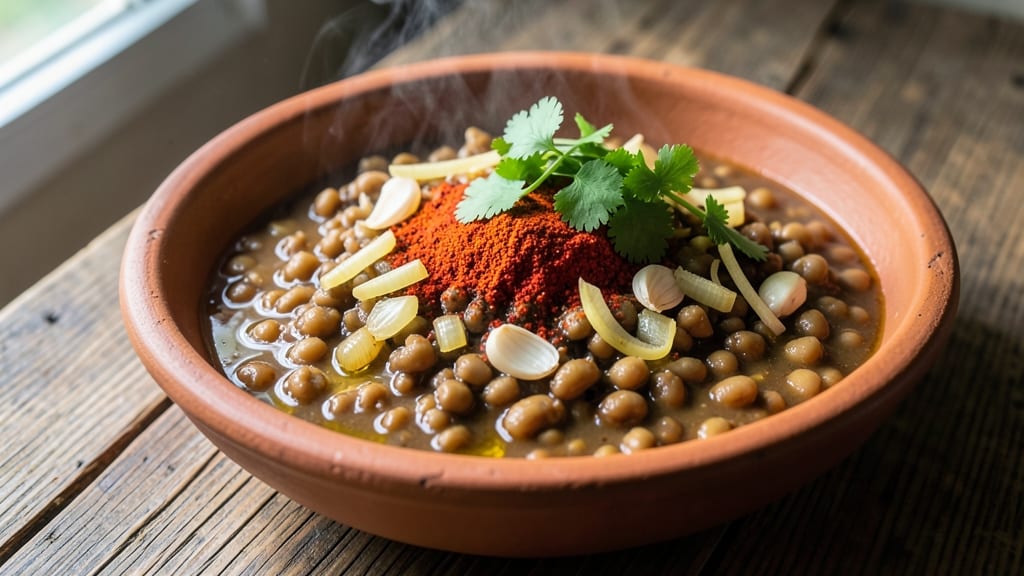
This Ethiopian beans recipe with berbere-spiced lentils transforms a simple pantry staple into a rich, aromatic centerpiece that belongs at every table. This recipe captures the soul of Ethiopian cuisine—where bold spices and slow-cooked beans create a dish so deeply satisfying it becomes a meal in itself. The key lies in the berbere spice blend, a fiery mix of chili, fenugreek, and cardamom that builds layers of complexity with every bite.
The beauty of this dish is in its simplicity: dried lentils simmered until tender, infused with garlic, onions, and the signature berbere blend. Unlike many spiced dishes, this one develops its flavor gradually, rewarding patience with a sauce that thickens into a velvety, spiced stew.
It’s naturally vegan, packed with plant-based protein, and designed to be served with traditional injera—though it works just as well alongside rice or crusty bread.
What you’ll end up with is a pot of aromatic, deeply spiced lentils that balance heat with earthy depth. The berbere creates a warmth that lingers, while the lentils hold their shape just enough to provide satisfying texture.
This isn’t just a side dish—it’s a flavor experience that turns a simple meal into something memorable, especially when shared with others.
Perfect for weeknight dinners or special occasions, this recipe scales easily and keeps well for days. The spices can be adjusted to taste, making it versatile enough for spice lovers and newcomers alike. Let’s get cooking—your taste buds will thank you.
Ingredients for ethiopian beans
Simple pantry staples and bold spices transform into a flavorful Ethiopian-inspired lentil dish.
| Ingredient | Amount | Notes |
|---|---|---|
| Brown Lentils 🍲 | 1 ½ cups | Dried, rinsed thoroughly |
| Berbere Spice Blend 🌶️ | 2 tbsp | Homemade or store-bought |
| Yellow Onion 🧅 | 1 whole | Medium, finely chopped |
| Garlic Cloves 🧄 | 4 cloves | Peeled, minced finely |
| Fresh Ginger 🌿 | 1 tbsp | Grated, or 1 tsp ground |
| Vegetable Oil 🫒 | ½ cup | High smoke point preferred |
| Tomato Paste 🍅 | 2 tbsp | Smooth, no sugar added |
| Vegetable Broth 💧 | 3 cups | Low-sodium preferred |
| Fresh Cilantro 🌿 | ¼ cup | Chopped, for garnish |
| Lemon Juice 🍋 | 1 tbsp | Freshly squeezed |
| Salt 🧂 | 1 tsp | Adjust to taste |
| Black Pepper 🌶️ | ½ tsp | Freshly ground |
| Cardamom Pods 🌿 | 4 whole | Lightly crushed |
| Fenugreek Seeds 🌾 | ½ tsp | Toasted lightly |
| Red Chili Flakes 🔥 | ½ tsp | Adjust for heat |
The berbere spice blend is the heart of this dish—homemade blends from specialty stores like Kalustyan's or Spicewalla deliver the most authentic flavor, but quality jarred blends work too. Look for berbere with visible chili flakes and fenugreek seeds for the best depth. If you’re making your own, toast the spices lightly in a dry pan before blending to enhance their aroma. The lentils should be brown or green, not yellow or split—those varieties can turn mushy. Rinse them well to remove any debris before cooking.
No berbere? Mix 1 tbsp paprika, 1 tsp each of cumin, coriander, and cinnamon, plus ½ tsp cayenne for a close approximation. Fresh ginger is ideal, but ground ginger at half the amount works in a pinch. The tomato paste can be substituted with diced tomatoes (½ cup), though paste gives a deeper, richer base. For extra richness, stir in 1 tbsp tahini at the end—it adds a nutty depth that complements the spices beautifully. If you’re short on cilantro, fresh parsley works just as well for garnish.
This dish tastes even better the next day as the flavors meld together. Store in an airtight container in the fridge for up to 5 days, or freeze for 3 months in portions. Reheat gently with a splash of water or broth to restore the sauce’s velvety texture. Serve with injera for authenticity, or pair with crusty bread and a simple salad for a complete meal. The leftovers reheat beautifully, making this a perfect make-ahead dish for busy weeks.
Why You'll Love This Recipe
- No-Stress Simplicity: I swear by this recipe because it’s the kind of dish that forgives mistakes. Brown lentils just need a quick rinse, onions and garlic get a rough chop (no dicing required), and the berbere spice blend does all the heavy lifting—no measuring spices by hand or second-guessing heat levels. Honestly, the hardest part is waiting for the ginger to soften in the pot.
- Umami Bomb: That berbere blend? It’s where the magic happens—smoky, citrusy, and just spicy enough to linger. The ginger and garlic caramelize into something deep and aromatic, while the lentils stay tender but hold their shape. Between us, this is the kind of flavor that makes bland meals feel like a betrayal.
- Weeknight to Party: I make this for lazy Tuesday dinners, but it’s also the star of my holiday spread. Serve it with flatbread for a no-fuss meal, or pile it onto grilled chicken for a crowd. Even my picky uncle (who hates spice) asks for seconds—proof it works for picky eaters and flavor lovers alike.
- Budget Workhorse: A pound of brown lentils costs less than a fancy dinner out, and this recipe stretches easily. I double the batch and freeze half for those nights when I’m too tired to cook. Plus, the berbere spice blend lasts months, so you’re not buying single-use packets—just one jar that turns simple ingredients into something extraordinary.
Step-by-step instructions for Ethiopian spiced lentils
Here's how to create rich, aromatic Ethiopian lentils with deep berbere spice and tender texture.
Prepare the Lentils and Aromatics
Rinse the 1.5 cups brown lentils thoroughly under cold water to remove any debris. Soak them in plenty of water for 30 minutes to soften slightly—this prevents them from becoming too mushy during cooking. While they soak, finely chop the 1 whole yellow onion and mince the 4 cloves garlic cloves and 1 tablespoon fresh ginger. Lightly crush the 4 whole cardamom pods with a mortar and pestle or rolling pin to release their aromatic oils.
Heat the 0.5 cup vegetable oil in a heavy-bottomed pot over medium heat. Add the onion and cook for 5 minutes until softened and translucent. Add the garlic, ginger, and crushed cardamom pods, cooking for another 2 minutes until fragrant. This foundational step builds the complex flavor base that defines Ethiopian cuisine.
Develop the Spiced Base
Reduce the heat to medium-low and stir in the 2 tablespoons berbere spice blend, 0.5 teaspoon fenugreek seeds, and 0.5 teaspoon red chili flakes. Toast these spices for 1-2 minutes until the aroma becomes deeply earthy and slightly smoky. This step is crucial—it activates the spices' flavors before adding liquids. Be careful not to burn them; the spices should smell rich but not acrid.
Add the 2 tablespoons tomato paste and stir for 30 seconds to coat the spices evenly. This creates a flavorful paste that will bind the dish together. Immediately pour in the 3 cups vegetable broth and bring to a gentle simmer. Stir in the drained lentils, ensuring they're fully submerged in the liquid. This prevents them from sticking to the bottom and burning.
Simmer to Perfect Texture
Cover the pot and simmer for 30-35 minutes over low heat, stirring occasionally. The lentils should be tender but still hold their shape with a slight bite—this texture is ideal for Ethiopian dishes. If the liquid reduces too quickly, add ½ cup water to maintain the proper consistency. Taste the mixture and adjust seasoning with the 1 teaspoon salt and 0.5 teaspoon black pepper as needed.
During the final 10 minutes of cooking, stir in the 1 tablespoon lemon juice. This brightens the dish and balances the rich, spiced flavors. The lentils should be fully tender but not falling apart, with a sauce that coats them evenly. If the mixture is too thick, add more broth to reach your desired consistency for serving.
Finish and Serve
Remove the pot from heat and let the lentils sit covered for 5 minutes. This resting period allows the flavors to meld and the spices to infuse fully. Stir in the 0.25 cup chopped fresh cilantro just before serving to add a fresh, herbaceous note that cuts through the richness of the spices.
Serve the Ethiopian spiced lentils immediately, accompanied by injera or crusty bread. The dish should have a deep, complex flavor with layers of berbere spice, subtle cardamom warmth, and a touch of lemon brightness. Each bite should offer both hearty texture and aromatic depth—this is the essence of Ethiopian cuisine captured in a simple yet profound dish.
Pro Tips For Making Ethiopian Beans
- SOAK LENTILS 30 MINUTES: I learned this the hard way—skipping the soak means your lentils turn mushy and split into paste instead of holding their shape. Just cover them in warm water for half an hour, drain, and rinse before cooking. The texture stays firm, and the flavor stays focused.
- TOAST BERBERE FIRST: Heat your berbere spice blend in a dry pan for 30 seconds before adding it to the onions. This blooms the spices and cuts the raw, earthy bite—trust me, it makes a real difference. Skip this, and you’ll taste the spices instead of the dish.
- LOW AND SLOW AFTER BOIL: Once the lentils hit a rolling boil, drop the heat to the lowest setting that keeps a gentle simmer. After burning three batches, I finally figured out that high heat after boiling turns the edges bitter and ruins the creamy finish. Keep it steady, like a lazy Sunday morning.
- GRATE GINGER FINE: Use the smallest holes on your grater for the ginger—no peeling or chopping. The finer it is, the more it dissolves into the sauce instead of sitting as chunks. I was skeptical until I tried it: the flavor spreads evenly, and you don’t have to taste every bite to know it’s there.
Perfect pairings for this ethiopian beans
Traditional Ethiopian Breads
No Ethiopian meal is complete without injera, the spongy, slightly sour flatbread made from teff flour. Its tangy flavor and unique texture make it the perfect vessel for soaking up the rich, spiced lentils.
If you can’t find teff flour, use a mix of all-purpose and whole wheat flour (2 cups total) with 1 tsp yogurt to mimic the fermentation process. Serve warm with the lentils at the center of the plate for an authentic experience. 🥖
Spiced Yogurt Dip
Balance the heat of berbere with a cooling spiced yogurt dip. Mix 1 cup plain yogurt with 1 tsp minced garlic, 1 tsp lemon juice, and ½ tsp ground cumin.
Garnish with chopped cilantro and a pinch of salt. This dip adds a creamy contrast that highlights the lentils' depth while refreshing your palate. It’s a staple in Ethiopian cuisine, often served alongside stews.
Fresh Vegetable Sides
Lighten the meal with a cucumber-tomato salad dressed with lemon and olive oil. Thinly slice 1 cucumber and 2 tomatoes, then toss with 2 tbsp olive oil, 1 tbsp lemon juice, ½ tsp salt, and a handful of cilantro.
The crisp, fresh flavors cut through the richness of the spiced lentils beautifully. For extra protein, add ¼ cup chopped red onion and a sprinkle of red chili flakes. 🥒
Ethiopian Coffee Ceremony
No Ethiopian feast is complete without coffee—specifically, the traditional buna. Brew 1 cup finely ground Ethiopian coffee with 1 cup water in a jebena (clay pot) or small saucepan. Serve in tiny cups alongside the lentils for a cultural touch.
The ritual of brewing and sharing coffee is as important as the meal itself in Ethiopian culture. For a quicker version, use a Moka pot or French press. ☕
Pickled Vegetables
Add a tangy crunch with quick-pickled onions or cabbage. Thinly slice 1 small red onion or ½ head of cabbage, then soak in a mixture of ½ cup vinegar, ½ cup water, 1 tsp sugar, and ½ tsp salt for at least 30 minutes.
The acidity brightens the dish and adds a refreshing contrast to the spiced lentils. Store leftovers in the fridge for up to 1 week.
Warm Spiced Tea
End the meal with a cup of Ethiopian spiced tea, often made with ginger and cardamom. Simmer 2 cups water with 1-inch fresh ginger, 3 cardamom pods, and 1 cinnamon stick for 10 minutes.
Strain and serve warm. The tea’s warmth complements the lingering spices in the lentils, creating a satisfying, balanced finish. 🍵
Nutrition facts
Frequently asked questions
What makes Ethiopian spiced lentils different from other lentil dishes?
The key difference lies in the berbere spice blend, a fiery mix of chili, fenugreek, cardamom, and coriander that creates a unique depth of flavor. Unlike many lentil dishes that rely on cumin or paprika, berbere adds layers of warmth and complexity that develop as the lentils simmer. The dish also typically includes ginger, garlic, and lemon juice for brightness, resulting in a sauce that's both aromatic and slightly tangy.
Can I substitute brown lentils with another type?
Brown lentils work best for this recipe because they hold their shape well while absorbing the spices. However, you can use green or puy lentils for a slightly firmer texture. Avoid yellow lentils or split peas—they become too mushy and lose their integrity. If you're using chickpeas (for a dish like shiro), soak them overnight and simmer for 45-60 minutes instead.
How can I adjust the heat level in this dish?
Berbere varies in spiciness, so start with 1.5 tablespoons and adjust to taste. For milder heat, reduce the berbere to 1 tablespoon and add ½ teaspoon sweet paprika for depth. If you love heat, increase the berbere to 2.5 tablespoons and add an extra ¼ teaspoon red chili flakes. Always taste before serving—you can balance heat with more lemon juice or a dollop of yogurt.
What’s the best way to store leftovers?
Let the lentils cool completely, then transfer to an airtight container and refrigerate for up to 5 days. The flavors actually improve overnight as the spices meld. For longer storage, freeze in portions for up to 3 months. To reheat, add 2-3 tablespoons of water or broth and warm gently on the stove to restore the sauce's velvety texture. Never microwave directly from frozen—it makes the lentils rubbery.
Can I make this dish in a slow cooker or Instant Pot?
For a slow cooker, sauté the onions, garlic, and spices first, then transfer everything to the pot with 2 cups broth and cook on low for 4-5 hours or high for 2-3 hours. For an Instant Pot, sauté the aromatics, add all ingredients, and pressure cook for 15 minutes on high pressure, then do a natural release. Both methods work well, but the Instant Pot version may need an extra 5-10 minutes of simmering to thicken the sauce properly.