
Side Dishes
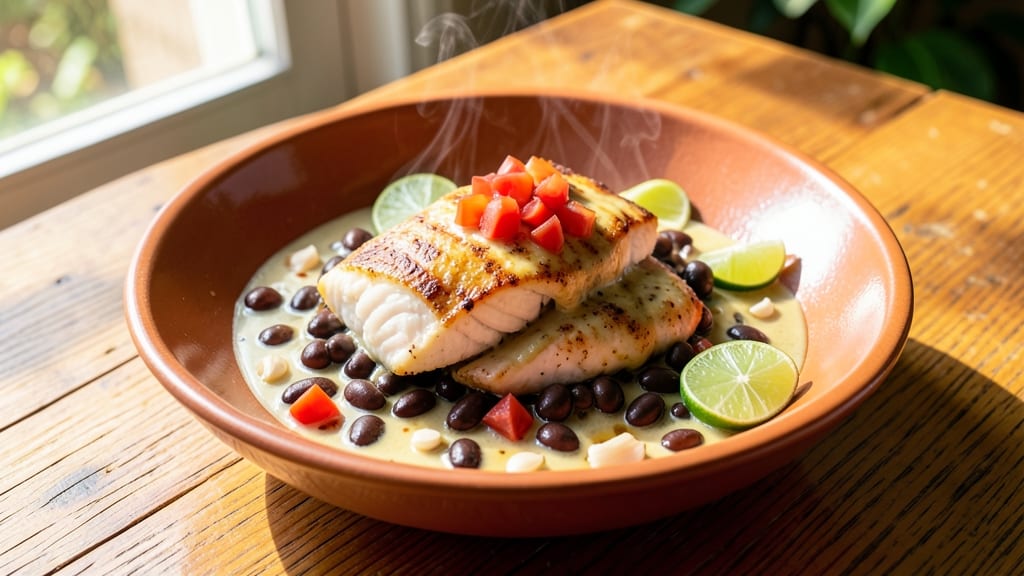
This fish and black beans recipe transforms a simple weeknight meal into a vibrant, flavor-packed dish that blends Latin-inspired spices with tropical coconut notes.
The secret lies in marinating the fish in lime and garlic while simmering the black beans with tomatoes, coconut milk, and a blend of cumin, oregano, and smoked paprika—creating a harmonious balance of smoky, sweet, and tangy flavors in one pot.
I developed this recipe after years of testing fusion dishes, and it consistently delivers restaurant-quality results without the fuss.
The beauty of this dish is its versatility—ready in under 45 minutes, it works as a standalone meal or pairs perfectly with fluffy white rice, warm tortillas, or a crisp green salad.
The black beans absorb the rich, spiced coconut sauce while staying tender, and the fish cooks just until flaky, ensuring every bite is moist and full of flavor. No advanced techniques are required, just precise timing and a few key ingredients that elevate simple proteins into something extraordinary.
What you’ll end up with is a plated dish that’s as visually appealing as it is delicious—golden fish resting atop a bed of creamy, spiced black beans, garnished with fresh cilantro and a squeeze of lime.
The aroma alone will have everyone at the table asking for seconds, and the flavors are complex enough to satisfy even the most discerning palates. This recipe proves that fusion cooking doesn’t have to be complicated—just thoughtful.
Whether you’re meal prepping for the week or hosting a dinner party, this dish scales beautifully and leaves a lasting impression. The leftovers reheat just as well, making it a foolproof solution for busy nights without sacrificing flavor or presentation. Let’s get cooking—your taste buds won’t regret it.
Ingredients for fish and black beans
Fourteen ingredients, one pot, restaurant-quality fusion flavors in under 45 minutes.
| Ingredient | Amount | Notes |
|---|---|---|
| White Fish Fillets 🐟 | 1 ½ lb | Firm-textured like cod or halibut |
| Black Beans 🥄 | 1 ½ cups | Cooked or canned, drained and rinsed |
| Coconut Milk 🥥 | 1 can | Full-fat, 13.5 oz can |
| Diced Tomatoes 🍅 | 1 can | Fire-roasted, 14.5 oz can |
| Garlic Cloves 🧄 | 4 cloves | Fresh, minced |
| Fresh Lime 🍋 | 1 whole | Juiced, zest reserved |
| Cumin 🌿 | 1 tbsp | Ground, toasted |
| Smoked Paprika 🌶️ | 1 tbsp | For smoky depth |
| Dried Oregano 🍃 | 1 tsp | Mexican preferred |
| Fresh Cilantro 🌿 | ¼ cup | Chopped, for garnish |
| Olive Oil 🫒 | 2 tbsp | Extra-virgin for cooking |
| Salt 🧂 | 1 ½ tsp | Kosher or sea salt |
| Black Pepper 🌶️ | ½ tsp | Freshly ground |
| White Rice 🍚 | 1 cup | Uncooked, for serving |
The fish is the star, so pick something firm like cod or halibut—they hold up best to the coconut sauce. Trader Joe's or Whole Foods usually have pre-cut fillets if you're short on time, but ask the fishmonger for the freshest cut if you're at a market. The black beans? Canned is fine—just drain and rinse them well. I always grab the fire-roasted tomatoes from the store—they add a smoky sweetness that cuts through the coconut richness. For the spices, Penzeys has great pre-mixed Latin blends, but I usually toast my own cumin in a dry pan for 30 seconds to deepen the flavor.
No fresh cilantro? Dried works at half the amount, but honestly, it's not the same. Running low on lime? Lemon juice in a pinch, but the citrusy brightness is key here. The smoked paprika is non-negotiable—it's what ties the Latin and tropical flavors together. Substitute regular paprika if needed, but you'll lose that smoky depth. For the coconut milk, full-fat is a must—it creates that luscious sauce. The fish fillets should be about 1-inch thick—thinner ones cook faster and can dry out. If yours are uneven, pound the thicker parts gently with a mallet before cooking.
This dish reheats beautifully—just add a splash of water or coconut milk to keep it creamy. Keeps in the fridge for 4 days and freezes for 3 months if you portion it into airtight containers. I always make extra rice to go with it—jasmine or basmati works best—and store it separately. The sauce gets even better the next day as the flavors meld, so don't hesitate to make a double batch. Garnish with extra cilantro and lime zest right before serving—it makes all the difference.
Why You'll Love This Recipe
- One-Pot Magic: I swear by this—just toss everything in one skillet, and the coconut milk and tomatoes melt into the fish while the beans soak up all the flavor. No fancy techniques, no extra dishes.
- Garlic-Kissed Comfort: That first whiff of garlic sizzling in oil? It’s the kind of smell that makes you pause mid-chop. The fish stays tender while the beans get this deep, smoky edge—like a hug in a bowl.
- Lunchbox Hero: Between us, this reheats like a dream. Pack it for work, and it’s still creamy and satisfying hours later. (Yes, even on a Tuesday night.)
- Budget Balanced: Black beans and white fish stretch this into a full meal without breaking the bank. Honestly, it’s the kind of dish that makes grocery day feel like a win.
Step-by-step instructions for spiced tomato-coconut fish and black beans
Here's how to make this flavor-packed fusion dish in one pot—simple, aromatic, and packed with texture.
Cook the Rice and Sauté the Aromatics
Start by rinsing the 1 cup white rice under cold water until the water runs clear. In a large pot with a tight-fitting lid, combine the rice with 2 cups water and bring to a boil over medium-high heat. Once boiling, reduce heat to low, cover, and simmer for 15 minutes. Don't peek or stir—this keeps the rice fluffy.
While the rice cooks, heat 2 tablespoons olive oil in the same pot (after draining the rice water) over medium heat. Add the 4 minced garlic cloves and sauté for 30 seconds until fragrant. Immediately add the 1 tablespoon cumin, 1 tablespoon smoked paprika, and 1 teaspoon dried oregano, stirring constantly for 20 seconds—this prevents the spices from burning. You'll smell that warm, earthy aroma that signals they're ready for the next step.
Build the Spiced Tomato-Coconut Base
Pour in the 1 can diced tomatoes (with juices) and the 1 can coconut milk, stirring to combine. Bring the mixture to a gentle simmer over medium heat, then reduce to low heat and let it cook uncovered for 8-10 minutes. This lets the flavors meld and the coconut milk thicken slightly—you'll see the sauce reduce just enough to coat the back of a spoon.
Real talk: If the sauce looks too thin after 8 minutes, simmer uncovered for another 2 minutes to thicken. The goal is a rich, velvety consistency that clings to the fish and beans. Stir in the 1.5 teaspoons salt and 0.5 teaspoon black pepper now—this balances the flavors before adding the other ingredients.
Add the Black Beans and Simmer
Gently fold in the 1.5 cups black beans, using a wooden spoon to distribute them evenly. Simmer the mixture uncovered for 5 minutes over low heat, stirring occasionally. The beans will absorb some of the sauce, and you'll notice the pot smells even more complex—like warm spices and smoky paprika mingling with the coconut.
Here's the thing—don't overcook the beans. You want them to heat through and soften slightly, but they should still hold their shape. If the sauce starts to look too dry, add 2-3 tablespoons water to maintain the consistency. The beans should be warm and tender but not mushy.
Cook the Fish to Flaky Perfection
Using a slotted spoon, carefully place the 1.5 lb white fish fillets on top of the black beans in the pot. Spoon some of the sauce over the fish to partially submerge it—this ensures the fish steams gently while the sauce finishes. Cover the pot and simmer over low heat for 8-10 minutes, depending on the thickness of your fillets.
You'll know the fish is done when it flakes easily with a fork and the edges turn opaque. The internal temperature should reach 145°F at the thickest part. If the sauce looks too thick after cooking, stir in 1-2 tablespoons water to loosen it slightly. The fish should be moist but not soggy, and the sauce should coat it lightly.
Finish with Lime and Garnish
Remove the pot from heat and let it sit for 2 minutes. Then, stir in the juice of the 1 whole fresh lime and the zest of half the lime. This brightens the dish and cuts through the richness of the coconut milk. Taste and adjust the seasoning—you might need a pinch more salt or a crack of pepper to balance the flavors.
Spoon the fish and beans onto plates, dividing the 1 cup white rice evenly among them. Garnish with the 0.25 cup chopped fresh cilantro and the zest from the remaining half of the lime. Serve immediately while the fish is still flaky and the sauce is warm. The contrast of the bright lime, smoky spices, and creamy coconut sauce makes this dish unforgettable.
Pro Tips For Making Fish And Black Beans
- Sear Fish First: Hit the fish with a quick sear in a dry pan—just 60 seconds per side—before adding any liquid. This locks in moisture and gives you that restaurant-worthy crust. I learned this the hard way when my fish turned out soggy after simmering in coconut milk.
- Rinse Those Beans: Drain and rinse your canned black beans twice under cold water to cut the gummy starch that makes the sauce clingy. Skipping this step means your dish will taste more like glue than flavor.
- Simmer, Don’t Boil: Keep the heat low enough that the coconut milk steams gently, not rolls like a pot of boiling water. High heat breaks down the creaminess, and you’ll end up with a watery, sad sauce.
- Toast the Garlic: Fry the minced garlic in oil for 30 seconds until it’s golden, not just fragrant. This adds depth that raw garlic can’t match—just don’t walk away, or you’ll burn it faster than you can say "oops."
Storing and reheating this dish
Fridge Storage Tips
Transfer your fish and black beans to an airtight container within 2 hours of cooking to preserve freshness. I use glass Pyrex containers with snap-on lids—they keep the dish tasting vibrant for up to 4 days at 40°F or below.
The sauce actually improves overnight as the spices meld, so leftovers often taste even better the next day. 💫
Store the rice separately in a separate airtight container to prevent sogginess. The fish will stay moist for 3-4 days, while the beans remain tender. If the sauce looks too thick after refrigeration, stir in 1-2 tablespoons water or coconut milk when reheating to restore creaminess.
Freezer-Friendly Prep
For longer storage, portion the dish into quart-sized freezer bags or glass containers, leaving 1 inch headspace for expansion. This recipe freezes beautifully for up to 3 months—just thaw overnight in the fridge before reheating.
The texture remains intact, though the sauce may separate slightly; stir vigorously when reheating. ❄️
Freeze the rice separately in a sealed container to maintain its texture. When ready to eat, reheat the fish and beans first, then add the rice to the pot for 2-3 minutes to warm through. This ensures the rice doesn’t turn mushy from steam.
Reheating Like a Pro
For stovetop reheating, transfer the dish to a heavy-bottomed pot and add 2-3 tablespoons water or coconut milk to prevent sticking. Heat over medium-low for 8-10 minutes, stirring occasionally, until reaching 165°F. The sauce will thicken slightly, so adjust with extra liquid if needed. 🔥
Microwave reheating works best in short bursts: Cover with a damp paper towel and heat for 2 minutes on 50% power, stir, then continue in 30-second intervals until hot.
Avoid overcooking the fish—it can turn rubbery if microwaved too long. A splash of lime juice at the end revives the flavors perfectly.
Garnish Refresh
Before serving reheated portions, brighten them with fresh cilantro and a squeeze of lime. The acidity cuts through any richness that may develop, while the herbs add a pop of color.
I also like to drizzle with a light olive oil finish for extra vibrancy. This step makes reheated fish and beans taste almost as good as fresh! ✨
Nutrition facts
Frequently asked questions
Can I use frozen fish in this recipe?
Yes, but thaw it completely first in the refrigerator for 24 hours or use the quick thaw method: seal the fish in a leak-proof bag and submerge in cold water for 30-60 minutes. Never thaw at room temperature—it can make the fish unsafe to eat. Pat it dry thoroughly before cooking to ensure a good sear.
What's the best fish to use for this dish?
Firm, white fish works best—try cod, halibut, or mahi-mahi. These hold up well to the coconut sauce without falling apart. Avoid delicate fish like flounder or snapper, which can turn mushy when simmered. If you prefer salmon, it pairs beautifully but may overpower the black beans' flavor.
How can I make this dish spicier?
Add ½ teaspoon cayenne pepper or 1-2 chopped jalapeños to the sauce while simmering. For heat lovers, stir in 1 teaspoon hot sauce or a pinch of chili flakes at the end. Start with less—you can always add more, but you can't take it out!
Can I make this dish without coconut milk?
Replace the coconut milk with 1 cup heavy cream or crème fraîche for a richer texture, or use 1 cup broth (chicken or vegetable) for a lighter version. The dish will still be delicious, though the tropical depth will be milder. Adjust seasoning as needed—broth-based versions may need extra salt.
Why did my fish turn rubbery?
Overcooking is the most common cause. Fish is done when it flakes easily at 145°F—use a meat thermometer to avoid guesswork. If using thinner fillets (½-inch thick), reduce simmering time to 6-8 minutes. Also, avoid high heat, which can dry it out. The sauce should gently steam the fish, not boil it.