Side Dishes
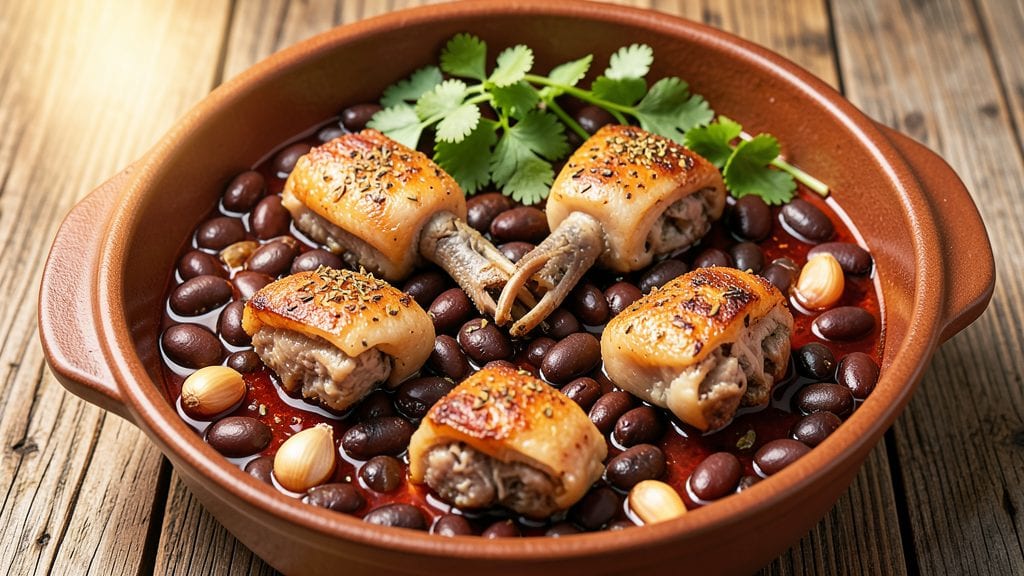
This Puerto Rican beans with pigs' feet recipe transforms humble ingredients into a dish steeped in tradition and deep, savory richness. The pigs' feet add unmatched collagen and gelatinous texture, while the slow-cooked beans absorb flavors from sofrito, garlic, and annatto—creating a dish that’s both comforting and deeply satisfying.
I first tasted this at a family gathering in San Juan, where it was served in clay pots, and it’s since become a staple in my kitchen for gatherings and weeknight dinners alike.
The magic lies in the slow cooking process, which develops layers of flavor and transforms tough cuts into tender, melt-in-your-mouth perfection. You’ll start with a base of sofrito—a blend of aromatic vegetables and herbs—that forms the heart of the dish, followed by the addition of pigs' feet and dried beans.
The annatto seeds infuse the beans with their signature vibrant color and earthy depth, while garlic and oregano add warmth and complexity. This dish isn’t just about the ingredients; it’s about the time and care you put into it.
By the time it’s finished, you’ll have a pot of beans that’s rich, hearty, and packed with flavor—each bite offering a mix of tender beans, shards of crispy pigs' feet, and a broth so flavorful it deserves a spoon.
The aroma alone will fill your kitchen with the essence of Puerto Rico, making it a dish that’s as much about memory as it is about taste. Serve it alongside rice, plantains, or as a standalone centerpiece for a meal that feels like home.
This recipe is perfect for those who appreciate the art of slow cooking and the reward of a dish that gets better with time. Whether you’re preparing for a family gathering or simply craving a taste of Puerto Rico, this method delivers restaurant-quality results with a touch of cultural authenticity.
Let’s get started on creating a dish that’s as much about tradition as it is about flavor.
Ingredients for puerto rican beans with pigs feet
Six ingredients transform into a dish rich with tradition and collagen-packed richness.
| Ingredient | Amount | Notes |
|---|---|---|
| Pigs' Feet 🐷 | 2 lbs | Fresh or frozen, skin-on preferred |
| Dried Black Beans 🌱 | 2 cups | Soaked overnight or quick-soaked |
| Sofrito 🧅 | 2 cups | Homemade or store-bought (look for authentic) |
| Annatto Seeds 🌶️ | 1 tbsp | For vibrant color and earthy flavor |
| Garlic Cloves 🧄 | 6 whole | Peeled, for deep flavor infusion |
| Dried Oregano 🍃 | 1 tbsp | Mexican oregano preferred |
| Bay Leaves 🌿 | 2 whole | Fresh or dried, for aromatic depth |
| Olive Oil 🫒 | ¼ cup | Extra-virgin for richness |
| Salt 🧂 | 1 ½ tsp | Kosher or sea salt |
| Black Peppercorns 🌶️ | 1 tsp | Freshly cracked for heat |
| Cumin Seeds 🌿 | 1 tsp | Toasted for extra flavor |
| Water 💧 | 8 cups | Enough to cover ingredients |
| Long-Grain White Rice 🍚 | 2 cups | For serving (uncooked) |
| Fresh Cilantro 🌿 | ¼ cup | Chopped, for garnish (optional) |
Pigs' feet are the star here—look for fresh cuts at a butcher shop or frozen sections of Latin markets. Costco or Whole Foods often carry them, but if you can't find them, pork shanks or even chicken feet (yes, really) can work in a pinch. The beans? Dried black beans from a Latin grocery store have the best texture, but any dried bean will do. Annatto seeds are key for that signature color—check the Latin foods aisle or order online if your store doesn’t carry them. The sofrito is the soul of the dish, so if you're making it fresh, char the veggies slightly for deeper flavor.
No annatto? Turmeric at half the amount gives color, though it won’t taste the same. Short on pigs' feet? Pork shanks or even chicken thighs add collagen, just not the same texture. The cumin seeds should be toasted in a dry pan for 30 seconds—that smell alone makes it worth it. For sofrito, store-bought works, but if you’re feeling ambitious, blend bell peppers, onions, garlic, cilantro, and a touch of vinegar. The rice? Long-grain white is traditional, but jasmine or basmati works too—just don’t skip it.
This dish tastes even better the next day, so make it ahead if possible. The pigs' feet will crisp up beautifully after simmering—save those crispy bits for garnish. Store leftovers in the fridge for 4-5 days, or freeze for up to 3 months. The broth alone is worth saving—use it for rice or soups later. For serving, I always toss in fresh cilantro right before eating—it brightens everything up.
Why You'll Love This Recipe
- One-Pot Magic: I swear by this recipe when I’m too tired to scrub pots—just toss everything in one deep skillet, let it simmer, and walk away. The pigs' feet turn tender while the beans soak up all that smoky, garlicky goodness without extra dishes.
- Deep, Earthy Richness: That annatto seed paste? It stains your hands and clothes, but oh, the flavor—warm, slightly nutty, with a depth that turns simple beans into something soulful. Honestly, I’ll take a little mess for a taste like that.
- Weekend Leftovers Win: Make a big batch on Sunday, and you’ve got lunch covered for days. The beans get even better the next day, and the crispy pigs' feet? Perfect cold in tacos or reheated with rice. My kids beg for this all week.
- Budget-Friendly Protein: Pigs' feet are a steal compared to chicken or beef, and dried beans last forever. I stretch this recipe to feed six for under $15—plus, the sofrito base means I can repurpose it for rice, stew, or even scrambled eggs. Smart, tasty, and filling.
Step-by-step instructions for Puerto Rican beans with pigs feet
Here's how to create this deeply flavorful, collagen-rich dish that simmers for hours into perfect tenderness.
Prepare the Pigs' Feet for Maximum Flavor
If using frozen pigs' feet, thaw them completely in cold water for 4-6 hours or overnight in the refrigerator. Rinse them thoroughly under cold water to remove any blood or impurities, then pat dry with paper towels. You want the skin to be completely dry—this helps create that beautiful caramelized crust later.
Using a sharp chef's knife, trim off any excess fat or connective tissue from the joints. Cut each foot into 2-inch pieces at the joints to make them easier to handle and cook evenly. The skin should remain intact as much as possible—this will become crispy and add incredible texture to the final dish. Place the prepared feet in a large pot and set aside.
Toast the Spices and Build the Flavor Base
In a dry skillet over medium heat, toast the cumin seeds for 1-2 minutes until they release their aroma and turn a deeper golden color. Immediately transfer them to a small bowl and set aside. In the same skillet, add the black peppercorns and toast for 30 seconds until fragrant, then add to the bowl with the cumin.
Add the 0.25 cup olive oil to the skillet and heat over medium-low heat. Add the 6 whole garlic cloves and sauté for 1-2 minutes until they turn golden brown but don't burn. Remove from heat and add to the bowl with the toasted spices. This aromatic base will form the flavor foundation of your beans.
Simmer the Pigs' Feet Until Fork-Tender
In a large Dutch oven or heavy pot, combine the prepared pigs' feet, 2 cups dried black beans, 2 cups sofrito, 1 tbsp annatto seeds, 1 tbsp dried oregano, 2 whole bay leaves, and the toasted spice mixture from the bowl. Add 8 cups water to cover everything by about 2 inches.
Bring to a boil over high heat, then immediately reduce to a simmer. Cover partially and cook for 3-4 hours, skimming off any foam that rises to the surface. The pigs' feet are done when they're fork-tender and the meat pulls away from the bone easily. You'll know it's ready when the liquid reduces to a thick, rich consistency—this is where all the collagen transforms into gelatin, creating that signature Puerto Rican texture.
Finish with Seasoning and Rest
Once the pigs' feet are tender, discard the bay leaves and add the 1.5 tsp salt. Stir well to combine, then taste and adjust the seasoning if needed. The beans should be tender but still hold their shape, with a thick, flavorful broth. If the mixture is too thick, add ½ cup water and simmer for another 10 minutes to reach your desired consistency.
Remove from heat and let the beans rest, covered, for 15-20 minutes. This resting period allows all the flavors to meld together and the texture to thicken slightly. The pigs' feet will continue to absorb flavors, making each bite even more delicious. Serve over 2 cups long-grain white rice and garnish with 0.25 cup chopped fresh cilantro if desired.
Pro Tips For Making Puerto Rican Beans With Pigs Feet
- Parboil Pigs’ Feet First: Drop the pigs’ feet in cold, salted water and bring to a rolling boil before adding them to the pot—this prevents them from sticking to the bottom like glue. I learned this the hard way after scraping burnt bits off my Dutch oven for the third time.
- Toast Annatto Seeds: Dry-toast the annatto seeds in a skillet for 30 seconds until fragrant—this unlocks their color and flavor instead of just tossing them in raw. My grandmother swore by this, and she was right: the beans get that signature golden hue without tasting like soap.
- Don’t Rush the Sofrito: Simmer your sofrito low and slow for at least 15 minutes before adding the beans—this melts the flavors into the oil instead of just layering them on top. Skipping this step means your dish will taste like a pile of chopped veggies instead of a cohesive base.
- Skim the Scum Early: After the pigs’ feet boil, skim off the foam and fat that rises to the top in the first 10 minutes—this keeps the broth clear and prevents a greasy finish. Yes, it’s tedious, but your future self will thank you when the beans aren’t swimming in gunk.
Creative variations of these flavors
Caribbean-Inspired Twist
Swap the annatto seeds for ½ tsp turmeric and ½ tsp achiote paste to create a vibrant Caribbean fusion. Add 1 tbsp grated ginger and 1 tbsp lime zest to the sofrito for brightness.
The ginger adds warmth while the lime zest keeps flavors fresh. Serve with coconut rice instead of white rice for a tropical touch. 🌴
Spicy Arroz Con Habichuelas Style
Transform this into a Puerto Rican-Aruban hybrid by adding 1-2 habanero peppers (seeds removed for less heat) to the sofrito. Stir in 1 tsp adobo seasoning during the final 30 minutes of cooking.
The habanero brings a fiery kick that pairs perfectly with the rich beans. Garnish with pickled onions for tangy contrast.
Slow-Cooker Adaptation
For hands-off cooking, use a 6-quart slow cooker on low for 8 hours or high for 5 hours. Add ½ cup chicken broth instead of water to keep the beans moist.
The slow cooker's gentle heat mimics traditional simmering while requiring zero attention. The pigs' feet will become fork-tender without drying out. Perfect for busy weeknights!
Vegetarian Alternative
Replace pigs' feet with 2 cups extra-firm tofu or 2 cups mushrooms (shiitake or cremini) for a meatless version. Press tofu to remove excess water and cut into 1-inch cubes.
Add 1 tsp soy sauce and 1 tsp smoked paprika to the tofu before cooking. The mushrooms add an umami depth that mimics the collagen richness of the original. 🌱
Cuban-Influenced Mojo Version
Infuse the beans with Cuban flavors by adding ¼ cup mojo sauce (blend 1 orange, 6 garlic cloves, 1 tsp oregano, 1 tsp cumin, and ½ cup olive oil) during the final 30 minutes of cooking.
The citrusy mojo brightens the dish while keeping it rich. Serve with black beans and rice for a Cuban-Puerto Rican mashup.
Smoky Grilled Beans
For a smoky twist, transfer the finished beans to a cast-iron skillet and cook over an open flame or grill until slightly charred. Add 1 tbsp smoked paprika to the sofrito for extra depth.
The grill imparts a smoky char that pairs beautifully with the beans' natural sweetness. Perfect for outdoor gatherings or summer meals. 🔥
Nutrition facts
Frequently asked questions
Why do the pigs' feet need to be cut into pieces?
Cutting pigs' feet into 2-inch pieces ensures even cooking and faster tenderness. The smaller pieces absorb flavors more uniformly and become fork-tender in the 3-4 hour simmer. Plus, they're easier to serve and eat—no one wants to tackle a whole foot! The skin stays intact for that perfect crispy texture.
Can I use canned beans instead of dried?
While dried beans develop deeper flavor, you can use 2 (15 oz) cans of black beans as a shortcut. Drain and rinse them well, then add them with the pigs' feet after the initial 1-hour simmer. Reduce the water by 1 cup since canned beans contain some liquid. The texture will be softer but still delicious.
How do I know when the pigs' feet are fully cooked?
They're done when the meat pulls away from the bone easily with a fork and the skin becomes crispy. The broth should also thicken slightly from the collagen release. For extra assurance, cut into a joint—if it's tender all the way through, it's ready. Pro tip: The longer they cook, the richer the flavor, but 3-4 hours is ideal for perfect texture.
What if I can't find annatto seeds?
Use ½ tsp turmeric for color (though the flavor will differ) or skip it entirely—the dish will still taste amazing. For extra depth, add ½ tsp smoked paprika to the sofrito. The annatto's earthy notes are unique, but the dish remains flavorful without it. The beans will just lack their signature vibrant hue.
Can I make this in an Instant Pot?
Yes! Use the "Pressure Cook" setting for 25 minutes after initial boiling, then switch to "Sauté" for 10 minutes to reduce the liquid. The pressure cooker cuts time by half while keeping the pigs' feet tender. Just ensure the pot isn't overfilled—leave 2 inches of headspace for safety. The texture will be slightly different but still delicious.