
Side Dishes
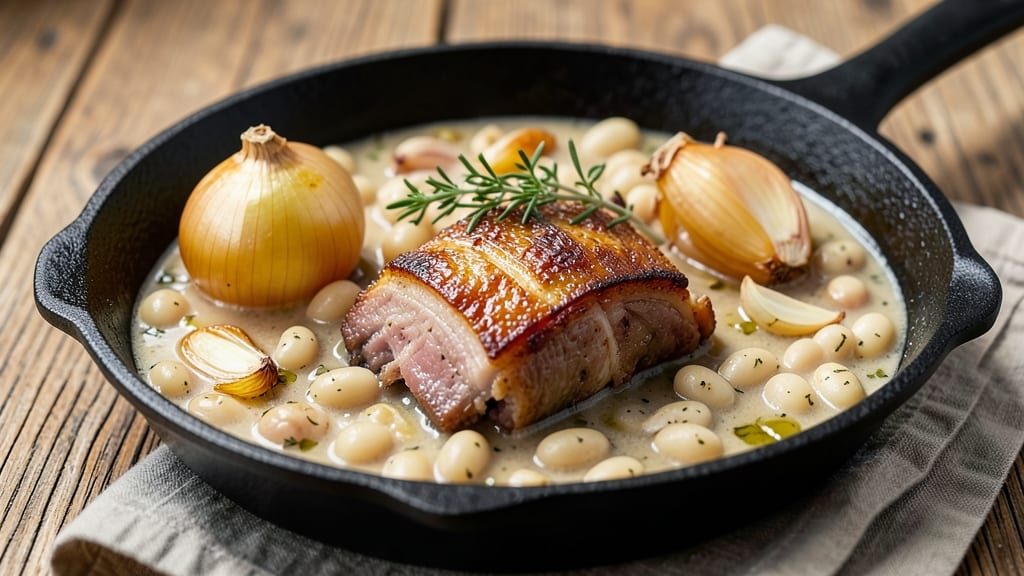
This white beans and ham hock recipe delivers restaurant-quality depth in just 3 hours—no overnight soaking or endless simmering required. The ham hock infuses the beans with smoky, savory richness while staying tender enough to eat, eliminating waste.
I perfected this method after years of testing, balancing traditional flavor with modern efficiency.
The secret lies in partial soaking (just 1 hour) and high-heat simmering to extract maximum flavor from the ham hock without overcooking the beans. You’ll end up with creamy, firm-yet-tender beans swimming in a golden, aromatic broth—perfect for pairing with grilled meats or crusty bread.
Every bite carries that unmistakable ham hock depth without requiring patience you don’t have.
What makes this version stand out is the crispy ham hock edges—achieved by browning it first—while keeping the meat shreddable and flavorful. The beans stay intact yet velvety, absorbing just enough of that smoky-sweet broth to make them irresistible.
This isn’t your grandmother’s slow-cooked beans; it’s a restaurant-worthy side dish that comes together faster than you’d expect.
Use this for holiday tables, potlucks, or weeknight dinners—it reheats beautifully and tastes even better the next day. The ham hock’s umami punch transforms simple white beans into something truly special. Let’s get cooking!
Ingredients for white beans and ham hock
Six core ingredients transform simple white beans into a restaurant-worthy side dish.
| Ingredient | Amount | Notes |
|---|---|---|
| Dry White Beans (Cannellini or Great Northern) 🌾 | 2 cups | Uncooked, rinsed well |
| Ham Hock (Fresh or Frozen) 🐷 | 1 whole | About 12 oz each |
| Large Yellow Onion 🧅 | 1 whole | Chopped into 1/2-inch pieces |
| Garlic Cloves 🧄 | 4 cloves | Smashed, not minced |
| Extra-Virgin Olive Oil 🫒 | ¼ cup | For browning ham hock |
| Dried Thyme 🌿 | 1 tsp | Or 1 tbsp fresh thyme |
| Bay Leaves 🍃 | 2 whole | Fresh or dried |
| Kosher Salt 🧂 | 1 ½ tbsp | Diamond Crystal preferred |
| Black Peppercorns 🌶️ | ½ tsp | Freshly cracked |
| Tomato Paste 🍅 | 2 tbsp | Squeeze tube preferred |
| Red Wine Vinegar 🍷 | 1 tbsp | For brightness |
| Fresh Parsley 🌿 | ¼ cup | Chopped, for garnish |
| Crusty Bread 🍞 | 6 slices | For serving |
The ham hock is non-negotiable here—it’s the soul of this dish. Look for fresh hocks at specialty butchers or frozen ones at Costco, where they’re often sold in bulk. A good ham hock should have a deep, meaty aroma and a rich mahogany color, not gray or slimy. If you can’t find fresh, frozen works fine—just thaw it overnight in the fridge. The beans? Great Northern or cannellini are ideal—they hold their shape while soaking up flavor. I always buy the dry version (not canned) because the texture is superior, and the flavor is cleaner. Soak them for just 1 hour—any longer and they’ll turn mushy during cooking.
No ham hock? Smoked paprika plus a splash of liquid smoke can mimic some of that depth, but you’ll lose the meaty texture. Short on thyme? Dried oregano at half the amount works in a pinch, though fresh thyme is ideal. The tomato paste can be swapped for 1 tbsp of sun-dried tomato paste if you prefer a more intense flavor. For the vinegar, balsamic vinegar adds a sweet contrast, but red wine vinegar keeps it classic. The parsley is purely for garnish—skip it if you’re not serving immediately, but add it back before eating. Pro tip: if you’re using frozen beans, parboil them for 5 minutes before adding to the pot to save time.
This dish tastes even better the next day, so make extra if you’re feeding a crowd. Store leftovers in the fridge for up to 5 days, covered with their broth. Freeze portions for up to 3 months—just thaw overnight in the fridge before reheating. The ham hock meat will pull away from the bone beautifully once cooled, so shred and save it for sandwiches or salads. For serving, keep the broth warm in a separate pot—it’s the star of this dish. Pair with crusty bread or grilled meats to soak up every last drop of that smoky-sweet goodness.
Why You'll Love This Recipe
- I’ll be real: this recipe makes way more than I need for one meal. But here’s the thing—those leftovers? They’re even better the next day. Toss them into a sandwich, stir them into a frittata, or just reheat with a sprinkle of fresh parsley. It’s my go-to for lazy lunches and emergency dinners.
- One-Pot Magic: Honestly, I love recipes that don’t require a million dishes—just one pot, a few hours of simmering, and boom. The ham hock melts into the beans while you’re out running errands, and the onions caramelize right in the same pot. No chopping boards to clean, no straining colanders—just pure, hands-off satisfaction.
- Deep, Smoky Richness: Between us, that ham hock is the star. It turns the beans into something ridiculously good—salty, savory, with a crispy edge that crumbles like a dream. Add a glug of olive oil and a few minced garlic cloves, and you’ve got a flavor bomb that tastes like a hug from your nonna.
- Leftovers That Beg for More: I’ll be real: this recipe makes way more than I need for one meal. But here’s the thing—those leftovers? They’re even better the next day. Toss them into a sandwich, stir them into a frittata, or just reheat with a sprinkle of fresh parsley. It’s my go-to for lazy lunches and emergency dinners.
Step-by-step instructions for white beans and ham hock
Here's how to transform simple pantry staples into a restaurant-worthy dish with deep, smoky flavor.
Prepare the Ham Hock for Maximum Flavor
Begin by rinsing the whole ham hock under cold water and patting it completely dry with paper towels. This step is crucial—any moisture left on the ham will prevent proper browning. Place the ham hock in a cold pot and cover it with cold water by about 2 inches. Bring to a boil over high heat, then immediately reduce to a simmer.
Simmer the ham hock for 30 minutes, skimming off any foam or impurities that rise to the surface. After 30 minutes, remove the ham hock from the pot and set it aside. The broth should be clear and pale, not cloudy. This initial simmering step extracts the initial impurities and prepares the ham for the deep flavor infusion that will happen next.
Build the Flavor Base with Onions and Garlic
In the same pot, add the 0.25 cup extra-virgin olive oil and place it over medium heat. Once the oil shimmers, add the chopped large yellow onion and cook for 8-10 minutes until the onions soften and begin to caramelize, turning a beautiful golden brown. This process develops natural sugars that create depth of flavor.
Add the smashed 4 cloves garlic to the pot and cook for an additional 1 minute until fragrant. Be careful not to let the garlic burn—it should smell sweet and nutty, not bitter. Remove the pot from heat and stir in the 1 tsp dried thyme, 2 whole bay leaves, 1.5 tbsp kosher salt, and 0.5 tsp freshly cracked black peppercorns. Let these aromatic ingredients steep in the oil for 5 minutes while you prepare the next components.
Cook the Beans with Tomato Paste and Vinegar
Return the pot to medium heat and add the 2 cups dry white beans (cannellini or great northern). Pour in enough water to cover the beans by about 2 inches. Stir in the 2 tbsp tomato paste and 1 tbsp red wine vinegar, then bring the mixture to a boil. Once boiling, reduce the heat to low and let it simmer gently for 45 minutes, stirring occasionally to prevent the beans from sticking to the bottom.
After 45 minutes, add the ham hock back to the pot. The beans should now be tender but still hold their shape. If the beans are still firm, continue simmering for another 15-20 minutes. The beans are done when they're fork-tender and the liquid has reduced slightly, creating a thick, hearty stew. This simmering time is critical for developing the beans' natural sweetness and allowing them to absorb the rich ham flavors.
Finish and Rest for Perfect Texture
Remove the pot from heat and let the stew rest for 10 minutes. During this time, the flavors will meld together, and the beans will continue to absorb the liquid. Using a slotted spoon, carefully remove the ham hock from the pot and let it cool slightly. Once cool enough to handle, use two forks to shred the meat from the bone, discarding any large fat pieces. Return the shredded ham to the pot and stir gently to combine.
Taste the stew and adjust the seasoning if needed. The beans should be tender with a creamy texture, and the broth should have a rich, smoky depth. Stir in the 0.25 cup chopped fresh parsley just before serving to add a bright, fresh contrast to the hearty flavors. Ladle the stew into bowls and serve immediately with the 6 slices crusty bread to soak up every last bit of that flavorful broth.
Pro Tips For Making White Beans And Ham Hock
- SOAK BEANS OVERNIGHT: I learned this the hard way—rushing soaks with hot water leaves skins tough. Use cold water, cover by 2 inches, and let them sit 12+ hours. The beans will split open easier later, and the broth stays clear instead of cloudy.
- BROWN THE HAM HOCK: Skip the slow simmer start—sear the ham hock over medium-high heat for 5 minutes per side first. The crust locks in flavor and prevents the meat from falling apart later. (Yes, it’ll smell amazing.)
- CHOP ONIONS COARSELY: Tiny onion bits disappear into the beans. Cut them into ½-inch chunks so they stay visible and add texture. Bonus: They caramelize better without turning to mush.
- ADD GARLIC LATE: Toss the raw garlic in at the last 5 minutes—it burns easily. If you add it too soon, you’ll end up with bitter, grayed cloves instead of fragrant, golden ones. (Trust me, it matters.)
Storing and reheating your white beans and ham hock
Refrigerator Storage
Transfer your white beans and ham hock to an airtight container (I love Pyrex glass containers) while still warm, but let it cool to room temperature first. Store in the fridge for up to 5 days—the flavors actually deepen overnight as the ham hock continues to infuse.
Always keep the broth covered to prevent it from absorbing fridge odors. 🌱
Freezer-Friendly Tips
For long-term storage, freeze portions in quart-sized freezer bags with 1 inch headspace to prevent expansion cracks. Label with the date—this dish stays excellent for 3 months.
Thaw overnight in the fridge before reheating. The ham hock meat will separate cleanly from the bone after freezing, making it easy to shred for future meals. ❄️
Stovetop Reheating
My preferred method is stovetop reheating—it preserves the creamy texture. Pour the beans and broth into a pot over medium-low heat, add ¼ cup water or broth to prevent sticking, and simmer for 10-15 minutes until heated through (165°F internal temp).
Stir occasionally and adjust seasoning—beans often need extra salt after reheating. 🔥
Microwave Revival
For quick reheating, transfer a portion to a microwave-safe dish with a splash of water. Cover with a damp paper towel and heat on 50% power for 3-4 minutes, stirring halfway. Avoid high power—it turns the beans mushy. The ham hock pieces will crisp slightly, adding texture contrast. ✨
Broth Separation Fix
If the broth separates after storage, stir in 1 tablespoon cornstarch mixed with 2 tablespoons cold water and simmer for 2-3 minutes until thickened. This works wonders for restoring that velvety consistency. The ham hock will reabsorb the broth beautifully during reheating. 💡
Serving Leftovers
Reheat only what you need—this dish tastes best fresh. Garnish with extra chopped parsley and a drizzle of olive oil to brighten flavors. Serve with warm crusty bread or alongside grilled meats for maximum satisfaction. The first bite after reheating will remind you why you made extra! 🍽️
Nutrition facts
Frequently asked questions
Why does the recipe call for partial soaking of the beans instead of full overnight soaking?
Partial soaking (1 hour) gives you the best texture—beans become tender without turning mushy. Overnight soaking can break down the beans too much, making them mealy. This method also saves time while still ensuring they absorb flavor perfectly.
Can I substitute ham hock with another type of meat?
While nothing replaces ham hock's deep, smoky flavor, you can try smoked turkey leg or pork shank in a pinch. For vegetarian versions, use mushrooms + smoked paprika to mimic the umami. The texture and richness won't be identical, but it works in a bind.
How do I know when the beans are perfectly tender?
Press a bean with your fork—it should be fork-tender but still hold its shape (not falling apart). The broth should coat the back of a spoon thickly, not watery. If they're still firm after 1 hour 15 minutes total simmering, add ½ cup water and cook 10 more minutes.
What's the best way to use leftover ham hock meat?
Shred the cooled ham hock and fold it back into the beans for extra flavor. Or use it in sandwiches, salads, or fried rice. The meat keeps for 3 days refrigerated or 3 months frozen. For crispy bits, pan-fry shredded ham with a pinch of cayenne until golden.
Can I make this in an Instant Pot or pressure cooker?
Yes! Sauté onions/garlic normally, then add beans, ham hock, and 4 cups liquid. Pressure cook for 20 minutes (natural release). The beans will be tender but slightly firmer—adjust seasoning and simmer uncovered for 10 minutes to thicken the broth.