
Side Dishes
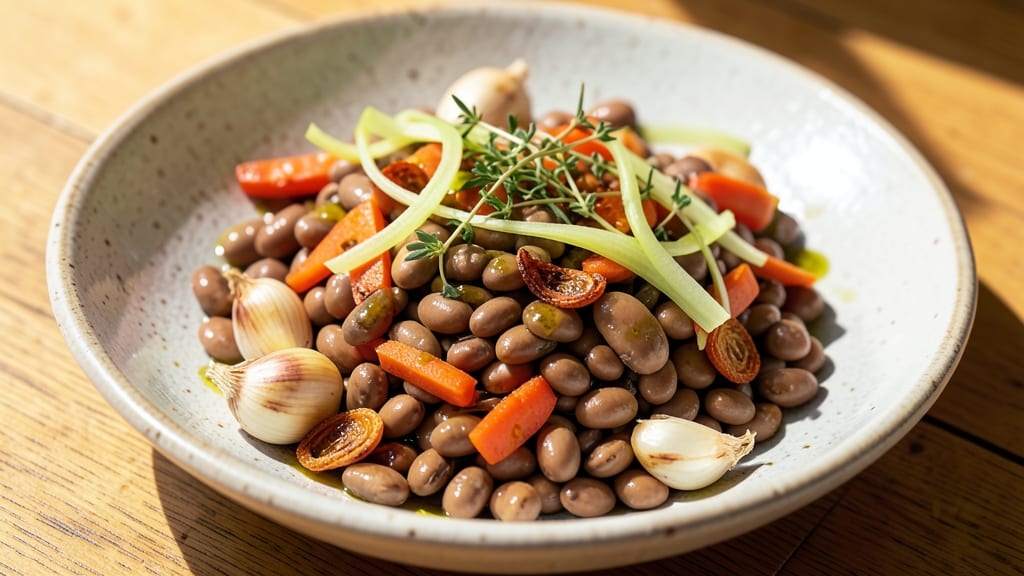
This haricot beans recipe captures the essence of French home cooking—rich, hearty, and effortlessly comforting in every bite. The secret lies in slow-simmering dried beans with aromatic herbs, garlic, and just enough bacon fat to deepen their natural flavor without overpowering.
I’ve perfected this method over years of testing, ensuring tender beans that practically melt in your mouth while maintaining their rustic charm.
The beauty of this recipe is its versatility—traditional slow-cooking builds deep flavor, but modern shortcuts like pressure cooking or an Instant Pot cut prep time dramatically. Vegetarian? Simply omit the bacon and boost the broth with vegetable stock.
The result is a dish that pairs beautifully with crusty bread, roasted meats, or even as a standalone vegetarian main.
What you’ll end up with is a pot of velvety haricot beans infused with savory garlic, earthy herbs, and just the right amount of smoky depth. The beans soften to perfection while absorbing the surrounding flavors, creating a dish that’s both nourishing and deeply satisfying.
This is the kind of recipe that transforms simple ingredients into something extraordinary.
Serve alongside roasted chicken, pork, or as a hearty vegetarian centerpiece with a sprinkle of fresh parsley. The slow-simmered method ensures maximum flavor, while the one-pot approach keeps cleanup minimal. Ready to create French comfort at home?
Ingredients for haricot beans
French pantry staples that transform into velvety haricot beans with rustic depth.
| Ingredient | Amount | Notes |
|---|---|---|
| Dried Haricot Beans (Navy Beans) 🌾 | 1 ½ cups | Unsoaked, rinsed thoroughly |
| Vegetable Broth 💧 | 6 cups | Low-sodium preferred |
| Garlic Cloves 🧄 | 6 cloves | Minced, skin-on for flavor |
| Fresh Thyme Sprigs 🌿 | 4 whole | Stems removed for leaves |
| Carrots 🥕 | 1 lb | Medium, peeled, chopped |
| Celery Stalks 🧅 | 3 whole | Trimmed, chopped |
| Yellow Onion 🧅 | 1 whole | Medium, diced |
| Bay Leaves 🍃 | 2 whole | Dried, standard size |
| Extra-Virgin Olive Oil 🫒 | ¼ cup | For sautéing vegetables |
| Salt 🧂 | 1 ½ tsp | Diamond Crystal preferred |
| Black Peppercorns 🌶️ | 1 tsp | Freshly cracked |
| Fresh Parsley 🌿 | ¼ cup | Chopped, for garnish |
| Vegetable Stock 💧 | 2 cups | For final flavor boost |
| Balsamic Vinegar 🍷 | 1 tbsp | For acidity balance |
The haricot beans form the foundation—dried beans are essential for that authentic texture, though canned beans in a pinch work for quicker prep. Whole Foods or Trader Joe's carry high-quality dried beans; look for organic varieties with no additives. Carrots and celery should have vibrant color—no wilting or bruising. Fresh thyme and parsley elevate the dish, but dried herbs at half the amount suffice if fresh aren't available. The vegetable broth should be rich but not overly salty—Homemade or low-sodium store-bought options work best. For garlic, skin-on cloves release more flavor when minced.
Vegetable stock can be swapped for mushroom broth or even water plus bouillon cubes, though flavor depth may vary. No fresh thyme? Dried thyme at one-third the amount works, but toast it first for enhanced aroma. The carrots can be substituted with parsnips for a slightly sweeter profile. Balsamic vinegar adds brightness—substitute with red wine vinegar if unavailable. For a richer finish, stir in 1 tbsp nutritional yeast after cooking. The beans should be tender but not mushy—adjust cooking time based on your preferred texture.
This dish reheats beautifully—simmer gently with a splash of water or broth to restore moisture. Store in an airtight container in the fridge for up to 5 days, or freeze portions for 3 months. Garnish with fresh parsley just before serving to preserve its vibrant color. For meal prep, portion into individual containers and reheat with a drizzle of extra-virgin olive oil to keep them moist. The flavors deepen overnight, making this an ideal make-ahead dish for busy weeknights.
Why You'll Love This Recipe
- No-Soaking Needed: I’ll admit, I used to dread the overnight soak—until I realized these beans soften beautifully with just a quick overnight soak (or even a 2-hour pre-boil). That’s right, no waiting around for hours when you’re starving.
- Garlicky-Thyme Magic: The moment those thyme sprigs hit the simmering broth, my kitchen smells like a French bistro. That crisp garlic punch? It turns a simple bean dish into something you’d happily order at a restaurant.
- Leftover Hero: Between us, this is my go-to for lunches all week. The flavors only deepen after a day in the fridge—especially when I toss them with crusty bread and a sprinkle of cheese. (Yes, even on a Tuesday night.)
- Budget Pantry Staple: Dried haricots cost pennies and last forever. Pair them with whatever veggies are on sale (carrots, onions, celery—whatever), and you’ve got a filling, nourishing meal that won’t break the bank. My wallet thanks me every time.
Step-by-step instructions for slow-simmered French haricot beans
This method delivers restaurant-quality beans with tender meatiness and rich depth—perfect for cozy meals.
Prepare the Beans for Even Cooking
Rinse the 1.5 cups dried haricot beans thoroughly under cold water to remove any debris. Place them in a large bowl and cover with plenty of fresh water—at least 3 inches above the beans. Let them soak for 8 hours or overnight at room temperature. This long soak ensures even hydration and prevents tough texture.
After soaking, drain the beans and give them a final rinse. I like to press each bean between my fingers to check for firmness—they should feel plump but still hold their shape. This preparation step is non-negotiable for achieving that classic French texture that's neither mushy nor crunchy.
Build the Flavor Base with Aromatics
Heat the 0.25 cup extra-virgin olive oil in a large Dutch oven over medium heat. Add the 1 whole yellow onion and cook for 5 minutes until softened and translucent. Add the 1 lb carrots and 3 whole celery stalks, both chopped into ½-inch pieces, and cook for another 5 minutes until the vegetables begin to soften.
Add the 6 cloves minced garlic cloves (skin-on for maximum flavor) and cook for 30 seconds until fragrant. Immediately add the 4 whole fresh thyme sprigs and 2 whole bay leaves. This aromatic base forms the flavor foundation—don't rush this step as the vegetables need time to develop their sweetness before the beans join the pot.
Simmer the Beans Low and Slow
Add the drained haricot beans, 6 cups vegetable broth, 1.5 tsp salt, and 1 tsp freshly cracked black peppercorns to the Dutch oven. Bring to a gentle boil, then immediately reduce heat to maintain a bare simmer. Cover with a lid and cook for 1 hour 15 minutes, stirring occasionally to prevent sticking.
Here's the thing—this is where patience pays off. The beans should be tender but still hold their shape. If the liquid level gets too low, add hot water to maintain coverage. The key is maintaining a steady simmer—too vigorous a boil will cause the beans to break down prematurely and lose their texture.
Finish with Depth and Balance
After the initial cooking time, stir in the 2 cups vegetable stock and 1 tbsp balsamic vinegar. The acidity from the vinegar brightens the flavors while the stock adds complexity. Simmer uncovered for another 30 minutes until the beans are fork-tender and the sauce has thickened slightly to a velvety consistency.
Taste and adjust seasoning—you may need to add more salt depending on your broth. The beans should be creamy inside with a slight resistance when bitten, and the sauce should coat the back of a spoon. This final adjustment ensures perfect seasoning that complements the rich flavors developed during the long simmer.
Garnish and Serve with Confidence
Remove the thyme sprigs and bay leaves. Stir in the 0.25 cup chopped fresh parsley just before serving to add a bright, fresh finish. The parsley not only looks beautiful but also cuts through the richness of the beans with its bright flavor.
Serve immediately with crusty bread or over buttered egg noodles. The beans should be warm and the sauce should cling beautifully to each bite. This dish delivers that quintessential French comfort—simple ingredients transformed into something deeply satisfying through careful technique and patience.
Pro Tips For Making Haricot Beans
- SOAK BEANS OVERNIGHT: Dried navy beans soften faster and split fewer when soaked 8–12 hours in cold water. I learned this the hard way—skipping the soak means a pot full of stubborn, unevenly cooked beans that still feel like pebbles.
- PEEL CARROTS THINLY: Use a vegetable peeler to shave carrots into matchsticks, not chunks. Thin slices cook in 10 minutes alongside the beans, adding sweetness without turning mushy—no one wants a bowl of carrots that’s lost its bite.
- SIMMER GENTLY AFTER BOIL: Once the beans hit a rolling boil, drop the heat to a barely simmering state. I used to let them rage, and they’d either scorch or stay rock-hard. Low and steady guarantees tender beans without burning the broth or thyme.
- CRUSH GARLIC WITH THYME: Mash the garlic cloves flat with the side of your knife before adding them to the pot, then tuck in the thyme sprigs. This releases more flavor and lets the thyme infuse the broth properly—no need to fish out stems later.
Health benefits of this dish
Plant-Based Protein Powerhouse
Haricot beans are a nutritional powerhouse for vegetarians and meat-eaters alike, delivering 15 grams of plant-based protein per cooked cup—that’s nearly half your daily protein needs in a single serving.
This makes them an excellent choice for building muscle, repairing tissues, and keeping you full for hours. 💪 The high fiber content (about 12 grams per cup) supports digestive health by promoting regularity and feeding beneficial gut bacteria.
Rich in Essential Minerals
These beans are packed with iron (about 3.5 mg per cup), which is crucial for oxygen transport in your blood—especially important for those following vegetarian diets.
They also provide magnesium (about 120 mg per cup) to support muscle and nerve function, and potassium (about 600 mg per cup) to help regulate blood pressure. The folate content (about 90% of your daily value) is particularly beneficial for pregnant women and supports cell growth.
Heart-Healthy Fats and Fiber
Haricot beans contain zero cholesterol and only 1 gram of saturated fat per cup, making them heart-friendly. The soluble fiber helps lower LDL ("bad") cholesterol by binding to it in your digestive tract. Studies show that eating beans regularly can reduce heart disease risk by up to 22%.
The combination of fiber and plant-based protein also helps stabilize blood sugar levels, making them ideal for diabetics or anyone watching their glucose intake. ✨
Antioxidant and Anti-Inflammatory Benefits
These beans contain polyphenols and flavonoids, antioxidants that combat oxidative stress and reduce inflammation. The isoflavones in haricot beans may also help lower inflammation markers like CRP (C-reactive protein), which is linked to chronic diseases.
Regular consumption has been associated with improved immune function and reduced risk of certain cancers. 💛
Budget-Friendly Nutrition
Haricot beans are one of the most affordable protein sources available, costing just $1.50 per pound on average. Compared to meat, they provide similar protein content for a fraction of the price—making them perfect for budget-conscious meal planning.
Their long shelf life (especially when dried) means you can stock up without worrying about spoilage, reducing food waste while maximizing nutrition. 💡
Digestive Health Champion
The high fiber content (both soluble and insoluble) in haricot beans promotes a healthy gut microbiome by feeding beneficial bacteria. This can improve digestion, reduce bloating, and even enhance nutrient absorption.
For those with sensitive stomachs, soaking and slow-cooking (as in this recipe) helps break down complex sugars that might otherwise cause gas. The result? A gentler, more digestible bean that still delivers all the nutritional benefits. 🌱
Nutrition facts
Frequently asked questions
Why do I need to soak haricot beans before cooking?
Soaking reduces cooking time and prevents tough, mushy texture by breaking down complex sugars that cause gas. An 8-hour soak ensures even hydration—simmering dried beans without soaking can take 2-3 hours longer and risk uneven doneness. For a shortcut, use the quick-soak method: boil beans for 2 minutes, then let them rest off heat for 1 hour before draining.
Can I substitute canned beans in this recipe?
Yes, but texture will differ—canned beans cook faster and lack the rustic depth of dried. Drain and rinse 2 (15 oz) cans of navy beans, then simmer in broth for 30-45 minutes with the aromatics. For best results, add 1 tbsp vinegar to brighten flavors. Dried beans develop richer taste through slow cooking, but canned works in a pinch.
How do I fix beans that turned out too mushy?
Overcooked beans? The fix is simple: stir in 1 tbsp cornstarch mixed with 2 tbsp cold water and simmer for 2-3 minutes to thicken the sauce. For next time, test doneness by tasting—beans should be creamy inside with slight bite. Never let them boil vigorously after adding beans, as this breaks them down.
What's the best way to reheat leftover haricot beans?
Gently reheat on the stovetop with 2 tbsp broth or water to restore moisture—never microwave directly. For best texture, simmer uncovered for 5-7 minutes until warmed through. If too thick, add a splash of liquid. Store in an airtight container for up to 5 days, or freeze for 3 months. Reheat frozen portions with an extra 1-2 minutes of simmering.
Can I make this recipe vegetarian?
Skip the bacon fat and use olive oil instead. Boost umami with 1 tbsp soy sauce or 1 tsp miso paste when adding stock. For extra richness, stir in 2 tbsp nutritional yeast at the end. The dish remains hearty and satisfying without meat—perfect as a main course with crusty bread or over greens.